
antonomasia

The concept from antonomasia comes from the Latin word antonomasia, which in turn derives from the Greek antonomasia. An antonomasia is a class of synecdoche which implies referring to someone through one of their qualities, or naming a quality through the proper name of the one who holds it.
It should be remembered that the idea of synecdoque belongs to the realm of rhetoric: It's about a trope (the change of one expression for another that has a figurative meaning) that designates an element with the name of another.
In this way we can say that antonomasia is a trope or, more specifically, a synecdoche. A example of antonomasia occurs when someone mentions the City of Light to name Paris. In this case, instead of referring to the capital of France by its name, it refers to its quality as a pioneer in the development of lighting for public spaces (or even its status as a "lighthouse" cultural).
If we focus on the Middle Ages and the beginning of the Renaissance, we will notice that "the Philosopher" was often spoken of to refer to Aristotle, one of the most prominent figures of Ancient Greece, thanks to his invaluable contributions in fields such as logic and philosophy. Given that Aristotle's ideas exerted an immense influence in the West that transcended time and space, with validity even to this day, it is only fair that his person be considered synonymous with thinker.
Refer to a man of great physical beauty as a Adonis it is also an antonomasia. The figurative sense arises from the mythological character Adonis, son of Ciniras Y Myrrh that stood out for its beautiful appearance.
Another example of this use, the reverse of the previous one, is frequently given in reference to Adolf Hitler and his unspeakable acts of cruelty, which left an indelible scar on the history of mankind. Since this unfortunate character showed us that human evil seems to have no limits, it is not uncommon to use his name as synonymous from bloodthirsty dictator.
The first person to have distinguished and established the use of this kind of antonomasia was Gérard Jean Vossius, a 16th century university professor from the Netherlands dedicated to teaching philosophy, theology, the Greek language, and history. For this reason, it is correct to mention it under the name of Vossian antonomasia. While it is about common nouns, they can also be capitalized and act as proper nouns.
The expression "Par excellence", on the other hand, it is an adverbial phrase that is used to mention a thing or a subject through an appellation that denotes that, between elements of the same class, is the most relevant or known. When someone talks about "The virgin" it is understood that, par excellence, refers to the virgin mary.
The use of this expression is common in everyday speech to enhance the abilities of certain highly gifted people, as well as to condemn the reprehensible attitudes of those who exhibit them in a way that is impossible to ignore. As can be seen, the range of cases that this term can cover, specifically when saying par excellence, it is very wide.
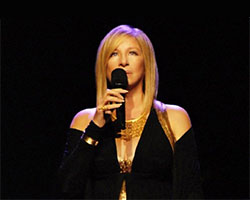
Let's see some sentences in which what is stated in the previous paragraph is clearly seen: "Barbra Streisand is the singer par excellence", "I could not trust this company, since they are criminals par excellence". If we wanted to express the same ideas in other words, we could say that "There is no singer with such a wonderful voice as Barbra Streisand" or what "This company is famous for scamming its customers in every possible way".
Leave a Reply