
anthropic
The Greek term anthropos (which can be translated as "human being") led to anthrōpikós ("human"), the closest etymological antecedent of anthropic. East adjective is used to rate that generated or transformed by an activity developed by man.
The anthropic, therefore, is something resulting from human action. The term is usually used with respect to the consequences caused by the processes executed by people on the environment.
The anthropic impact or environmental impactIn this way, it is the effect of the human being's action on the ecosystems and the biodiversity. The vast majority of the tasks carried out by individuals leave environmental consequences, although certain tasks are more damaging than others.
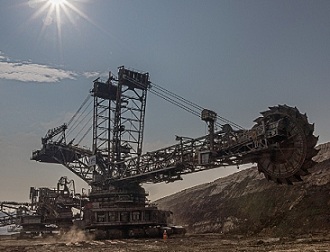
The mining, for example, is an activity of great anthropic impact. The extraction of minerals tends to attack aquifers, underground strata and the surface since, in the framework of the works related to this industry, the topography is modified, vegetation is eliminated, particles are emitted into the atmosphere and the water is polluted.
The felling of trees to obtain paper and the circulation of motor vehicles are other anthropic actions. These operations modify the habitat and they affect climate change that, according to many scientists, our planet is experiencing.
Beyond the strictly environmental, there are other anthropic risks linked to what the human being does. A war, in fact, gives rise to a man-made catastropheThousands or millions of people can be killed by bombardments and attacks by fighting forces.
On the other hand we have the concept of anthropic principle, according to which the world is in a certain way because there are beings that have the ability to wonder why it is this way. For the cosmology, the study of the universe as a whole, this principle ensures that theories about the universe must be consistent with our existence.
In other words, the mere attempt to verify a condition for our existence it verifies it, since we exist. Many scientists have tried to put this principle into practice to develop different theories about cosmology, and this has led to controversy and confusion.
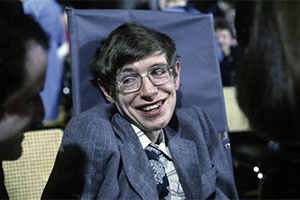
The acclaimed British physicist Stephen William Hawking explains in his work History of time our existence justifies that we see the universe as it is. In addition, he points out that the anthropic principle has two versions: the strong and the weak. The first postulates that the universe must meet certain characteristics that lead to the development of life at some stage in its history.
The weak version of the anthropic principle, on the other hand, says that values that we observe of the cosmological and physical magnitudes do not have the same degree of probability, but are restricted by the possibility that in certain points of the Universe carbon has given rise to the development of life, which is accentuated with the age of the Universe itself .
In 1986, physicists Tipler Y Barrow They categorized these two versions, plus a third: the final. According to this version, an intelligent form of information processing must acquire existence in the Universe and never lose it.
It should be noted that the weak version has received negative criticism for not considering the existence of other forms of life, a fault that is attributed to not having been conceived with a sufficient level of creativity. It is also said that the range of possible values for the constant physics that give rise to carbon-based evolution is not as restricted as that proposed in it. In any case, the fort is considered "unscientific" due to the impossibility of pointing out its validity.
Leave a Reply