
anosmia

It is called anosmia to total loss of smell. This sense refers to the ability to perceive odors. When the reduction of said capacity is not absolute, but partial, we speak of hyposmia (term that is not recognized by the Royal Spanish Academy in your dictionary).
Anosmia can be chronicle (if kept in the weather) or alone temporary (the disability is not prolonged). On the other hand, it is possible to refer to the specific anosmia, which only prevents the detection of certain aromas.
For him diagnosis of anosmia, doctors often make patients smell different fragrances. This way they get to know if they perceive the aroma or if, on the contrary, they cannot register it.
If the person born with anosmia, there is talk of congenital anosmia. There is the possibility that the individual is born with a normal olfactory capacity and that, over time, it may be lost due to disease, infection, surgery or other cause.
Although certain anosmias cannot be treated, others can be reversed with the use of corticosteroids. The goal is to minimize mucosal inflammation that prevents normal functioning smell.
When a human being suffers from anosmia, suffers from various disorders. These people have difficulty distinguishing the taste of meals since, although the tongue is in charge of detecting if it is an acid, bitter, salty or sweet food, it is the smell that is responsible for recognizing all the other nuances. Anosmia also prevents the individual from noticing a gas leak, for example.
People who enjoy a good state of Health Generally from childhood they are not aware of the impact that a condition such as anosmia can have on their lives. In general, human beings are more concerned with conditions such as blindness or paralysis, because we believe that we depend more on our legs and our sight than, for example, on our smell.
However, if we focus on the fact that anosmia can not only prevent us from enjoying food and smell of flowers, but it can also lead us to ignore a gas leak or a fire that is taking place in our own home, it goes without saying that it is not a minor illness.
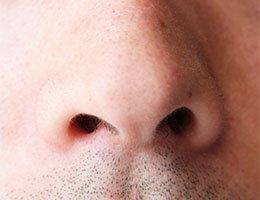
There are certain conditions that are related to anosmia, although its symptom are different or even opposite; Let's look at three examples below:
* hyperosmia: This is a greater capacity for olfactory perception than normal, which in turn leads to a more efficient detection of flavors. It is important to note that, despite its association with anosmia and hyposmia, this phenomenon is much less common. Among the most common types of causes are environmental, genetic, the consumption of certain drugs or even pregnancy (in the latter two cases, hyperosmia occurs temporarily);
* parosmia: it is a condition characterized by the inability to identify the intrinsic or natural smell of different objects, due to a deterioration of smell. In short, a person with this disorder perceives certain odors in a distorted, generally unpleasant way. Some of the causes of perosmia are upper respiratory infections, epilepsy, trauma in the head and Parkinson's disease;
* phantosmia: this disease leads the person to perceive odors that are not present, both pleasant and unpleasant or worrisome, such as the aroma of flowers or the smell of burning. Statistics indicate that this disorder can disappear over time, although it can also be treated with medical help. Although it is not a serious condition in itself, it is usually accompanied by problems such as brain tumors, disease Parkinson's disease or schizophrenia, among others.
Leave a Reply