
annelids
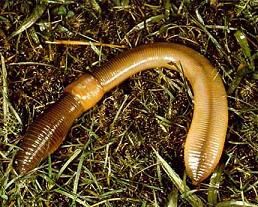
The annelids They are animals with Body almost cylindrical and rings or transverse folds. These rings or folds are external, but correspond to internal segments of the body. Annelids have a cavity called coelom, which is divided by transverse partitions. Inside the coelom, there is a fluid in which the organs are suspended.
The aforementioned transverse partitions separate the different segments of the body, which present some portion of the nervous system and the circulatory system. Therefore, they can function almost independently. Each of the segments is known as metamer and is marked, on the outside, by one or more rings.
Specialists estimate that there are about 16,500 species of annelids, which can reach a length of between less than one millimeter and more than three meters. Most live in the marine environment, although there are some species that reside in the land (as the worm) and others that live in fresh water (the leech).
Annelids belong to the type of worms, although not all worms are annelids. In this case, it is about animals invertebrates protostomes with a vermiform appearance.
When classifying annelids, it is important to emphasize that basically four large groups are established:
Clitelados. These are living beings that are characterized by having what is known as clitellum, which is nothing more than a part of their body that is basically functioning within what are the reproduction tasks. Within this large group we should also highlight that it is subdivided into two groups: the hirudíneos, such as leeches, and the oligochaetes, which includes species such as the well-known earthworms.
Equiuroids. Basically within this large group we would highlight that it is made up of those marine-type worms that have a proboscis that cannot be moved and that are not segmented.
Polychaetes. We can underline this third group of annelids that it is the largest of the four classifications and it is mainly comprised of those of the marine type. They also stand out for the fact that they use parapods to dig or swim, among other actions.
Myostomids. To speak of this last set is to emphasize that it is made up of everything that are the parasites of echinoderms.
As mentioned above, the best known annelids are worms, earthworms, and leeches. The latter are characterized, above all, by the fact that they are aquatic, mainly live in fresh waters, and that they have an approximate length of about twelve centimeters. Another of their hallmarks is that they feed on the blood they suck from the living beings they cling to.
The exterior of the annelids is covered by a epidermis that secretes a protective cuticle. A layer of circular musculature appears below the epidermis, which in turn covers a layer of longitudinal muscle fibers.
Finally, it should be noted that annelids can reproduce both in a sexual (some species are hermaphroditic) as in shape asexual (by the fission method).
Leave a Reply