
animality

The Latin word animals arrived in Castilian as animality. This is what the condition or nature is called animal.
Animals, meanwhile, are sentient living beings They move of their own accord. Beyond its intelligence, the traditional definition of the concept of animal refers to its irrationality, as opposed to the reasoning capacity of the people.
Animality, in this framework, is that of an animal. The notion is associated with instinct or to essence of these organic beings.
Many times animality is alluded to to describe or explain actions of an animal that, from the human perspective or transferred to the behavior of a human being, they are cruel or bestial. This animality erupts when a lioness goes hunting and kills a cub of another species for food, to mention one possibility.
Take the case of a dog living as a pet in a house. The owners of the dog tend to humanize him, buying him clothes or celebrating his birthday. However, despite domestication, the dog remains an animal. His animality can appear, for example, if he attacks a child because he feels threatened. This attack cannot be judged with ethical criteria (it is not an act "bad"), but has to be understood from the animal condition of the dog.
This is one of the most common cases of bypassing animality. Almost all human beings who live with dogs (and cats, too) treat them as if they were "another person", something that in principle has nothing wrong, but reflects the love they come to feel for them. It is not uncommon to hear them say "I love him like a son" or "I treat him like a couple." The problem begins, however, when they are required to comply with all our rules.
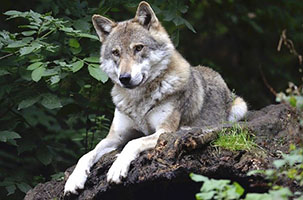
The conventional definition of animality includes an appreciation regarding the functioning of the brain of animals, in particular their inability to reason. It should be noted that not everyone agrees with this statement, but even if it were true we should not forget that the reasoning or the mindset of each species is probably different. For this reason, without going into accusations about the brain potential of each species, we cannot pretend that a dog respects the laws written by a human being, just as we would not be able to respect those of a wolf.
It is frequent, on the other hand, that people talk about animality of the human being. In this case, mention is made of the traits given by the biology or that they are not crossed by culture, or actions that do not present the inhibitory brakes that are acquired socially.
At this point we enter once again the derogatory nuance towards animals: we say that the culture it takes us away from animality, as if animals did not have their own culture. That we do not understand their codes does not mean that they do not have them; it is enough to observe closely any species to discover that their world is as rich as ours, although different. This does not mean that all living beings with certain characteristics in common have a certain degree of animality, something that cannot be started by means of social impositions.
In our case, unlike what happens with the rest of the species, we rely on the protection provided by the security forces and the Judiciary: if someone threatens us or hurts us, we denounce it and trust that the State protect us. We accuse that individual of not having «checked his animality », something that makes him weird and dangerous. We, on the other hand, act in accordance with the laws. In short, animality does not mean being less sophisticated, but more natural: if they attack me, I defend myself; if I'm hungry, I get my food on my own, without resorting to exploitation.
Leave a Reply