
anatomy
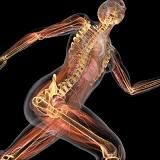
Anatomy has its origin in latin anatomy which, in turn, comes from a Greek term that means "dissection". The concept allows to name the analysis of the conformation, the state and the links of the different sectors of the Body of human being and of other living beings.
Anatomy, therefore, studies the characteristics, location and interrelationships of the organs that are part of a living organism. Is discipline is responsible for developing a descriptive analysis of living beings.
The first anatomical study It dates from 1600 BC and is recorded on Egyptian papyrus. Through it, we can know that this ancient civilization had important knowledge regarding viscera and human structure, although little did they know how each organ worked.
Who increased the knowledge in this branch was Aristotle, in the 4th century BC At that time the first dissections of human corpses were carried out and, thanks to them, it was possible to know the functioning of the different parts of the organism.
Later, the Romans and the Arabs advanced a little further, and later, during the Renaissance, new studies emerged that became known as modern anatomy which was based, not on the writings of a few thousand years ago but on the actual observation carried out by various scientists, including Andrés Vesalio, one of the key representatives of this science.
Various classifications
According to your approach, it is possible to divide the anatomy into clinical or applied anatomy (links a diagnosis to a treatment), descriptive or systematic anatomy (divides the organism into systems), regional or topographic anatomy (appeals to spatial separations), physiological or functional anatomy (focuses on organic functions) or pathological anatomy (specialized in organ damage), among others.
In turn, according to the type of organisms that this science studies, it can be called plant anatomy and animal anatomy.
The anatomy of plants, also known as plant anatomy is a branch of botany that is responsible for studying the internal structure of the species that belong to the Kingdom Plantae. This science includes the study of organisms starting from the cellular level and covering both tissues and bone structure.
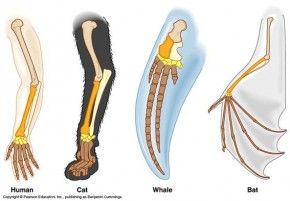
Animal anatomy, for its part, can be subdivided into human, animal and comparative anatomy. The first two are those that study each species (humans or other animals) according to the behavior of their cells and organs. Comparative anatomy is the one that complements the first two and allows us to establish similarities and differences between different types of living beings of the Animal Kingdom.
The human anatomy, as its name implies, it is dedicated to the study of the structures of the human body. In general, it is oriented towards knowledge about macroscopic structures, since other disciplines (such as histology wave cytology) handle minor items, such as cells or the fabrics. The human body can be understood as an organization of structures at different levels: molecules that form cells, cells that make up tissues, tissues that establish organs, organs that are integrated into systems, etc.
It is worth mentioning that anatomy can also focus on the study of the biological processes as is the case of the development of life (through the study of embryos) or of the pathologies that individuals of a species may suffer (studying diseased organs to detect patterns of common diseases among living beings of the same).
On the other hand there are also the surgical anatomy (is in charge of studying the best ways to perform operations on the various organs) and artistic anatomy (deals with anatomical issues related to the representation of the human figure in the art), which allow to connect the anatomy with other activities. In turn, the anatomy can be named taking into account the techniques used for its study, such is the case of microanatomy.
Leave a Reply