
anaphora
The etymology from anaphora brings us to a Greek word that can be translated as "repetition" and that came to Latin as anaphŏra. The concept has several uses and is often linked to a Figure of speech consisting of purposely repeating terms or ideas with an aesthetic or discursive intention.
For example: “I always think of you, / I always have your face in mind. / I always remember that summer night, / I always long for the other ". In this case, the anaphora consists of the reiteration of the word "forever" at the beginning of each verse.
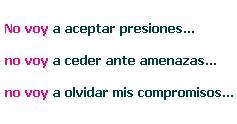
In the field of oratory, anaphora can be used to emphasize ideas. It is a resource that political leaders often use in electoral campaigns. A candidate for president may state in a speech: “I will not accept pressure from the powerful; I will not give in to the threats of the corporations; I am not going to put aside my convictions; I will not forget my commitments to the people ... ". As can be seen, the anaphora used implies repeating "I'm not going to" at the beginning of the different sentences.
It is important to take care of the way in which this resource is used, since it can be ineffective if it is abused or if the inappropriate parts are repeated. On the other hand, anaphora is not always necessary, another reason why we must study its potential effects before including it in a text. When more than one word is repeated, the length of the sentence should not be excessive, as this could cause some interference in the message.
All this leads us to think that anaphora is a very difficult resource to use effectively and with good taste. Far from being a mere and arbitrary repetition of words, it serves to group together a series of ideas and concepts that we want to emphasize and highlight, without interrupting the flow of the text and in a way that can be recorded in the mind of the reader if it is done in an aesthetic and moderate way.
For the linguistics, the anaphora is the identity bond established between an element of grammar and one or more terms that were mentioned previously. In this area it has three well differentiated meanings, although they are related in a certain way:
* the use of an expression that can only be interpreted with the help of another, which is in the context of the discourse and is called antecedent;
* the expression itself (usually a pronoun) whose meaning depends on another that can also be found in the context. In this case it speaks of deictics, that is to say, of words whose meaning depends on the issuer and which can only be determined based on it;
* Faced with a restrictive interpretation of the two previous points, we understand by anaphora only those cases in which the context is found before the anaphora. On the contrary, we can speak of cataphor, to refer to deictics that have a Referrer located after them in the text.
To understand this meaning of the term anaphora, let's look at the following example: "Before being promoted to Marketing Director, Adela worked in the technical service industry"; As can be seen, the pronoun «la» refers to «Adela», and is found before we can understand its meaning, which is why it responds to what is described in point 2, although it can also be a cataphor, according to the restricted vision of point 3. All this is part of the concept of linguistics known as endophor.
Anaphora, finally, is a fragment of the liturgy which has different correspondences according to rite in question.
Leave a Reply