
ammeter
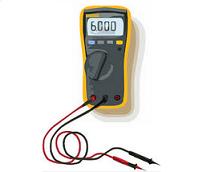
A ammeter is a device that allows you to perform the amp measurement what have the current electric. To accurately understand the meaning of the concept, we must therefore know what amperes are and what electric current is.
The electric current is produced by the movement of electric charges on a material. It is a magnitude that reflects the electricity that, in a unit of time, flows through the conductive material. The ampere, in this framework, is the unit that allows quantifying the intensity of the stream.
Returning to the notion of ammeter, this instrument measures the intensity of the current that circulates in an electrical circuit. By connecting the ammeter to the electrical circuit, it is possible to find out the number of amperes (that is, the intensity) of the circulating current.
The measurement consists of making the electric current circulate through the device. The internal resistance of the ammeter is very small so that a voltage drop does not occur at the time of measurement. If you want to measure the current without opening the circuit, it is necessary to use a particular kind of ammeter known as amperometric clamp (defined below), which measures intensity indirectly through the magnetic field generated by the current in question.
There are several types of ammeters, which we can roughly divide into three groups: analog, digital, and amperometric clamps.
Analog Ammeters
The description provided in the previous paragraphs is nothing more than the foundation of the older ammeters, which were analog. As in many other areas, although this technology It was designed a long time ago, it is still used today.
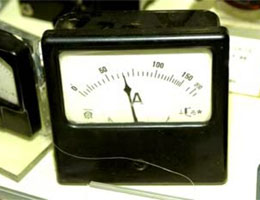
Analog ammeters present the result of the measurement with the help of a needle that is positioned at the corresponding point between the minimum and maximum available in the panel indication. In this group of devices we find two subgroups: electromechanical and thermal ammeters.
Broadly speaking, we can say that electromechanical ammeters they rely on the mechanical interaction that takes place between electrified conductors, between a magnetic field and a current, or between two currents. Their design is relatively simple: they have two organs, one mobile and one fixed, and a needle to indicate the resulting value.
This type of ammeter is undoubtedly quite bulky and that leads to greater wear on its parts, as well as a greater probability of error in measurement. On the other hand, it surpasses other models in speed and is useful for readings at fixed positions. Ammeters fall into this group magnetoelectric, the electromagnetic, the electrodynamic and the ferromagnetic.
With respect to thermal ammeters, take advantage of the expansion of the conductors when subjected to high temperatures, which is proportional to heat and, according to Joule's law, this is also proportional to the square of the current regardless of its direction or nature, which is why these devices are useful for both direct and alternating current reading.
Digital ammeters
Thanks to advances in technology, this type of ammeter was born, more versatile and practical to use than analog ones. Its main advantages include less wear (in the absence of moving parts) and a significant reduction in the probability of error. Instead of a panel with a needle, they have a screen on which you can view the results of the reading.
Amperometric clamps
This kind of ammeter is also known as pincers or hook, and it is very useful since it allows a measurement Instantaneous intensity without the need to interrupt or open the circuit. Since it does not have electrical windings, there is no risk of catching fire.
Leave a Reply