
altitude
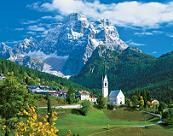
From Latin high, altitude is the distance vertical that exists between a point of the land and the level of sea. The term is also used synonymously with height in reference to a distance from the earth, to the region of the air at a certain elevation above the surface or to the dimension of a body perpendicular to its base.
For example: "The refuge is at an altitude of 2,500 meters, so we still have to climb a lot to get to it", "The satellite orbits at an altitude of 300 kilometers", "The commander has just reported that we are flying at an altitude higher than normal to avoid a storm front".
To calculate the altitude, the reference is usually sea level or mean sea level. This point, however, is not constant due to the action of the tides and the differences that exist according to the region. That is why each country usually determines a level of sea according to a specific place and a certain time of the year. The calculation of the altitude in a country, therefore, will be made based on that predetermined level.
Altitude is usually measured in meters. That is why they talk about meters above sea level (which may be abbreviated as msnm). Thus it can be said that the peak of a mountain is at 1,850 meters above sea level or that the hotel is 400 meters above sea level.
While in European and most Latin American countries the altitude is measured in meters, in USA it is usually measured in feet.
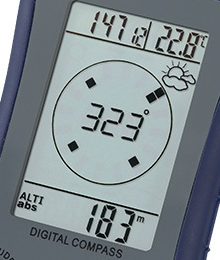
The measuring instrument used to measure altitude is known as altimeter; basically, it allows to determine the distance between your location point and a reference point, and is frequently used to determine the height above sea level. It is not necessarily a separate tool; some bicycle speedometers, for example, have a built-in altimeter.
The altimeter is widely used in aeronautics, an area in which it has become one of the instruments significant flight times of an aircraft, providing more safety to the crew. On the other hand, it is also used in any activity, sporting or not, in which there are considerable slopes, such as skiing, mountaineering, cycling, trekking, parachuting, trail running and climbing, among others, to find out which slopes are overcome. in every moment.
Thermal floors
Thermal, climatic, ecological or biotic floors are called a concept related to the relative altitude of a relief and its influence on the climatic types of a given area, since it is the modifying factors of the weather more important, especially in the intertropical zone (the strip between the Tropics of Cancer and Capricorn).
In the intertropical zone, for every 1.8 m of height the temperature it decreases an average of 1 ° C, which may seem insignificant but represents a very important variation; This phenomenon is known as thermal gradient and it is the one that gives rise to the concept of thermal floors.
Some researchers speak of Altitudinal geography to refer to thermal floors in intertropical countries and, according to the author, four or five floors can be distinguished, each with features such as the average temperature, the insolation and the precipitations so different from those of the rest as to define a climate for each altitude.
It is very important to understand the great influence that altitude can have on the climate in the intertropical zone, and the precision that the concept of thermal floors provides when defining mountain climates.
Leave a Reply