
alphabet
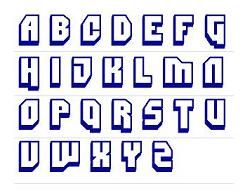
It is called alphabet (or alphabet) yet group of letters structured under a specific order generally accepted within the framework of a language. It is a set made up of the spellings intended to represent the language. In the Spanish language, this group owes its name to the first three letters that make it up: TO, B Y C.
The system adopted for the Spanish language is roman alphabet, which offers a structure of writing that serves as a worldwide basis since, with certain modifications, it is used in most of the tongues spoken in America, the European Union, the area of Sub-Saharan Africa and the islands located in the Pacific Ocean.
According to experts on issues linguistic, the first alphabet books of the West found their origin in the northern semitic alphabet, which appeared more than 3,500 years. Despite the name that identified it, the Roman alphabet was used by the etruscans from the Greek letters. In the beginning I had only 21 letters, which over time were expanded to meet the 26 that we know today. Likewise, it must be said that it is known as latin alphabet to the derivation of the conventional Roman alphabet that includes graphic variations such as the case of the Ñ.
Is the alphabet essential for writing?
Throughout history there have been many alphabets that in turn led to other; today, there are many and very varied, although some have many similarities to each other.
In Ancient Greece, more precisely in 900 BC, the semitic alphabet, used by the Phoenicians, and they expanded their list of 22 signs, in part to represent the vowels. Three hundred years later, when its alphabet was already consolidated (having spread throughout much of the Mediterranean) it was adopted by the Roman people, who in turn merged it with Latin to create a more complete variant. With the great conquests made in this period, they managed to make their alphabet become the basic one of all Western European languages.
Another known alphabet in ancient times was the Cyrillic (name given by one of its creators, Saint Cyril), created in 860 AD in Constantinople. His goal was to achieve a symbol system that would bring together the sounds of the language of the Slavic people. It was based on Greek and Hebrew letters and consisted of 43 characters, some of which were new. Scripts such as Russian, Ukrainian, Serbian and Bulgarian derive from this alphabet. Not to be confused with Polish, Czech, Slovak or Slovenian, which come from Roman. What persists today of the Cyrillic alphabet are various systems of writing; some characters have been lost and others have been transformed, taking different forms in each region.
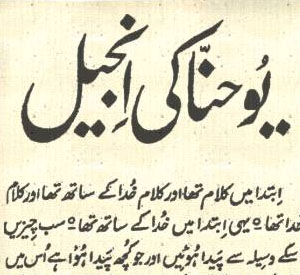
Arabic is another of the alphabets that descends from the same origin as those mentioned above; It is believed that it arose from the fourth century of our it was and that it has not undergone many changes. At present it is used by all countries belonging to the Islamic world, certain countries in Asia, Africa and southern Europe. It is many things similar to the Hebrew alphabet, as in that it almost completely lacks vowels (except for three long ones, the rest are represented with diacritical marks).
With regard to Chinese writing, it could be said that it is unique since it does not consist of a phonetic or alphabetic system but is based on ideograms (graphic representation of ideas or objects); In other words, they lack an alphabet and instead have a large number of symbols that allow them to represent their writing in an absolutely different way. At this point we can clarify that the alphabet is not strictly necessary for the growth of the writing. It is just one of the more conventional ways; neither the richest nor the most important.
Other types of writing in which the alphabet is not used to express an idea are:
* Themorse script (also identified with the name of Morse code), which consists of an alternative based on the representation of numbers and letters by means of signals that are emitted intermittently. In principle, it was used in telegraph lines through cable runs and later it was extended to communications by radio;
* The Braille, a system tactile reading and writing skills that were developed specifically for the benefit of individuals who are blind or visually impaired.
Leave a Reply