
allele
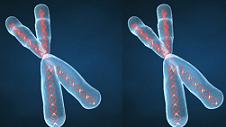
The term allele it derivates from allelomorph: which can appear in different forms. In the field of biology, each allele is called gene which, in a pair, is located in the same place on the homologous chromosomes.
Alleles are the different forms that a gene, each with its own sequences. By manifesting, determine certain characteristics according to their properties. Blood group and eye color, for example, are expressed through alleles.
Mammalian animals, such as the human beingThey usually have two sets of chromosomes, one from the mother and the other from the father. They are, therefore, organisms diploid. The various pairs of alleles are found at the same site on the chromosome.
Genes, within the framework of cellular meiosis, they dispute their position on the chromosomes. The allele is the value that e assigns to the gene throughout this confrontation and it depends on him whether or not he succeeds in establishing his dominance, and marks how the transmission of the copies of the gene that was procreated will be. It should be noted that the copy, or the set of copies, of the gene that is procreated is not always in the form of an identical transmission, since it can also be different.
Considering the potency of the allele just mentioned, it is not uncommon for us to establish a classification, and that is why we say that alleles can be dominant (If the mother and father have it, it will always be expressed on the chromosome of their offspring and it is seen in it only with one copy of the procreators) or recessive (They have to be provided by the parents when procreation occurs and two copies of a gene are necessary for their expression on the resulting chromosome).
This link between alleles is known as dominance: one gets to mask the phenotype (the form of expression of the genotype –genetic information– according to the environment) of the other allele located in the same position on the chromosome. Genetic inheritance depends on these dominance relationships.
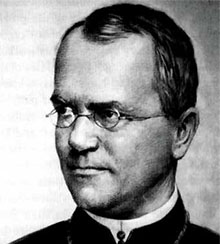
The monk and naturalist Gregor Johann Mendel, born in what is now the Czech Republic in 1822, was especially interested in the inheritance genetics, to the point of having defined laws that establish the basic set of rules about the transmission of the traits of organisms that living beings carry out through it when they procreate. The Mendel's laws they are considered the basis of current genetics, although from their publication in 1865 until their revival in 1900 they were ignored.
It is precisely in Mendel's extensive and in-depth research that a definition of alleles is quite graphic and accessible to people outside of genetics. It focuses on reproduction of peas, and points out that the gene responsible for regulating the color of its seed has two alleles: one to determine the proportion of yellow, and another for that of green.
Mendel also assures that the normal thing is that each gene presents more than one allelic form, so that we find the normal allele (also known as wild allele or wild) in a much higher proportion than the rest, and that the corresponding ones, that is, those that occur in the female, can appear in different degrees of abundance and are called polymorphisms.
From this it follows that for each pair of alleles (a1 Y a2) we can find three kinds of combinations different in diploids, which are the following: (a1, a1); (a2, a2); (a1, a2).
Leave a Reply