
adjuvant
Adjuvant It is a notion that comes from the Latin word adiŭvans. It's about a adjective that qualifies that or that which assists, collaborates or helps. In medicine there is often talk of adjuvant therapy, adjuvant treatment, adjuvant drug, etc.
Take the case of Cancer. Who has a tumor receives a main therapy whose purpose is to eliminate or reduce the cancer in the specific place where it was detected. The patient can then receive a adjuvant therapy to increase the chances of survival without recurrence. For this, it seeks to destroy cancer cells that, even without being detected, may have spread throughout the body. Adjuvant therapy, in this way, can consist of radiotherapy or chemotherapy, to name two possibilities.
In the same way, we cannot ignore that other therapies that can be used as such against the aforementioned disease are targeted therapy, that which supports hormones or that which responds to the name of biological. Different proposals that will be established according to the case in question and the doctor's vision.
The adjuvant drugs, on the other hand, are those that complement the action of the main drug. Certain anticonvulsants, antidepressants, and corticosteroids work as analgesic adjunct drugs since, although when they are supplied in isolation they do not serve as analgesics, they help to enhance the effects of the analgesics with which they work in association.
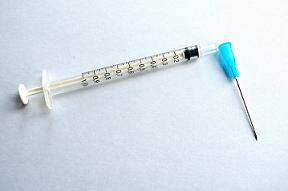
Also the vaccines they can be given together with an adjuvant. In this case, the adjuvants help to increase the efficacy of the vaccine and its immune power. In general, they are substances that manage to stimulate the immune system and, in this way, favor the action of the vaccine. It is often said that the adjuvant, many times, defines the success of the vaccine in preventing or eradicating a disease in a given population.
This term we have to state that it was used for the first time at the beginning of the 20th century. Specifically, it seems that it was introduced by the French biologist Gaston Ramon in 1925. And it is that he began to use it in reference to vaccines. Then other illustrious scientific figures would follow, such as Glenny and Cols, Thibaut or Richou, among others.
In relation to vaccines, we find the existence of several different types of adjuvants, such as the following:
-Lipidic particles, as would be the case with liposomes.
-Mineral salts, such as aluminum phosphate, aluminum hydroxide or calcium phosphate.
-Interleukins.
-Immunostimulatory adjuvants, such as lipopeptides, saponins or bacterial DNA.
-Microparticles, as would be the case of biodegradable particle microspheres.
-Genetics.
-Mucosal adjuvants. In this group are found from the labile toxin to the choleric toxin.
In addition to all the above, in this case it must be stated that these types of adjuvants can work in two different ways. On the one hand, by clearly and directly activating what cell receptors are and on the other hand, through the so-called antigen release system.
Leave a Reply