
Active
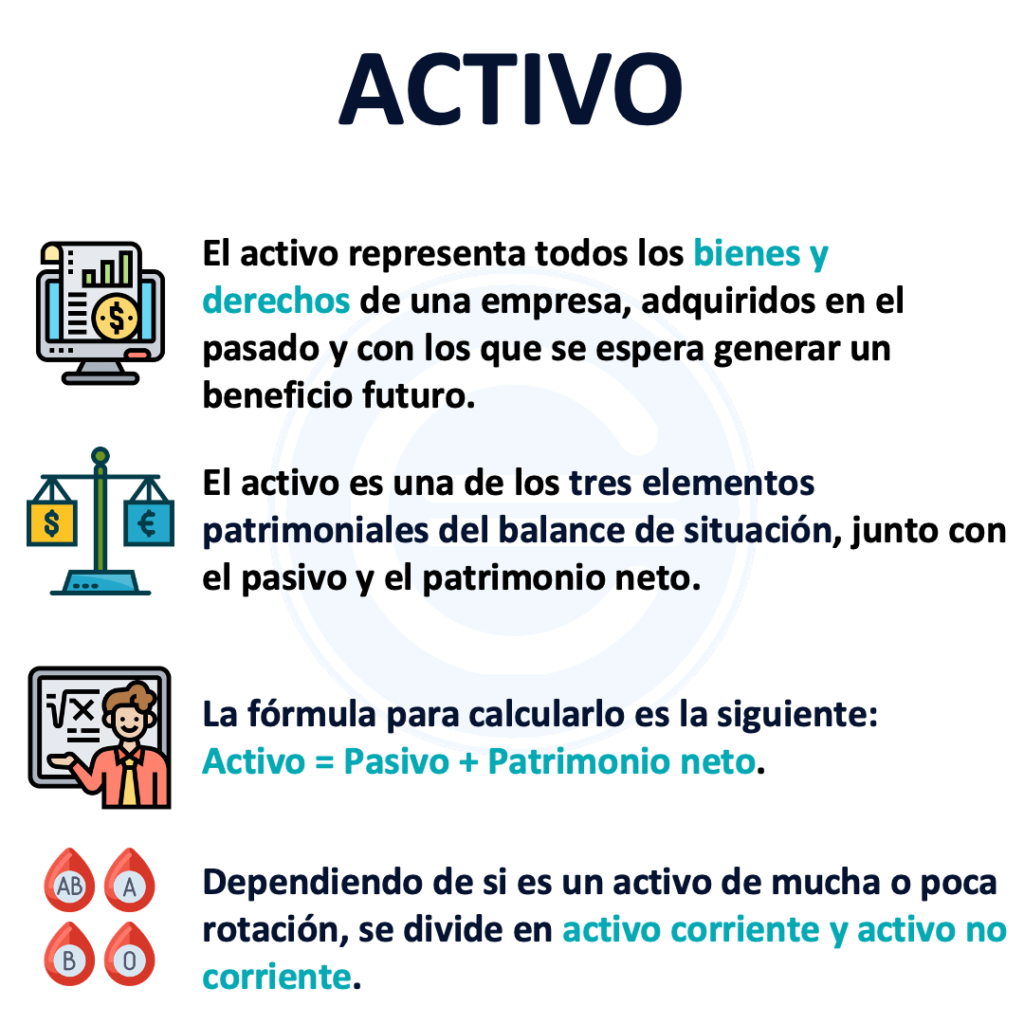
An asset is a valuable resource that someone owns with the intention of generating a future benefit (economic or not). In accounting, it represents all the assets and rights of a company, acquired in the past and with which they hope to obtain future benefits.
They have in common that they are the result of past events and are capable of generating economic returns in the future. All assets have the potential to bring money into the business, whether through use, sale, or exchange.
Examples of assets are a premises, a van, a patent, a computer, raw materials, financial investments or collection rights, among many others.
The asset in accounting
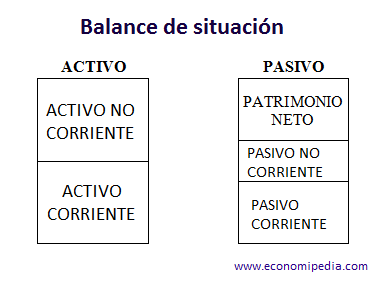
Assets are one of the three assets on the balance sheet, along with liabilities and equity:
How is the asset calculated?
The asset is what is owned, the liability is owed and the net worth are the financial resources that belong to the company. How do we calculate the asset? We can calculate it as the liability plus the net worth:
Assets = Liabilities + Equity
The assets of a company represents its capital mass and is also known as the economic structure, while the liabilities are known as the financial structure, because it is the structure that serves to finance the assets.
The requirements that an accounting account must meet to be considered an asset are the following:
- The event that originates an asset must have ended.
- As a consequence, the company must have acquired economic control of the right assets and resources.
- This control is expected to obtain economic benefits in the future.
Depending on the company and the nature of its activity, assets change differently. For example, for a transport company, its main asset will be trucks, which will be replaced every 7 years and yet in the case of a furniture factory it will use its facilities for many years, but the wood it uses to make furniture will have it. to buy continuously.
Asset components
The asset is divided into two assets, which are distinguished by their function in the operating cycle. The assets that rotate the most, such as raw materials for production and cash, form current assets, which make up the most liquid assets. While the more durable and less liquid assets form the non-current assets, which are converted into liquidity through amortization.
- Current active: They become effective in a period of less than one year. For example inventory and treasury.
- Non-current assets: They have a useful life of more than one year. For example, buildings, vehicles and machinery.
You may also be interested in: How to classify assets on the balance sheet?
Leave a Reply