
acacia
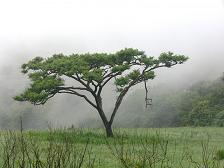
Acacia is a term that comes from Latin acacia, although its etymological root is found in the Greek language. It's about a tree or bush which belongs to group family member of legumes and to the subfamily of mimosa.
Acacias, which are characterized by hardness from his wood, produce bunches of aromatic flowers and, on occasions, they present thorns. Its fruit, on the other hand, is a legume. It must be borne in mind, however, that there are more than two thousand species of acacias: their characteristics, therefore, vary.
Acacias can be found in almost all subtropical and tropical areas of the planet. Australia and the African continent it's two o'clock regions that exhibit more diversity of these shrubs or trees, which in ancient times were considered magical thanks to their usefulness for curative purposes.
The mimosa acacia (Acacia dealbata) is one of the most popular species. He usually lives for about thirty years and has a height average of about twelve meters. Because of its flowers and its ability to fix the ground, the mimosa acacia is often planted in gardens, parks and various public spaces.
The Acacia farnesiana, known colloquially as whitehead, is another popular species. As its name implies, it has thorns. This shrub can be used to make perfumes, adhesives, pesticides and other products.
It is important to mention that many species of acacias are obtained gum arabic, a polysaccharide that is present in your resin and that allows the tree to heal wounds. Gum arabic is used to produce sweets, tinctures and medicines, for example.
Only the leaves and the flower of the acacia are used for a large number of medicinal uses, thanks to their properties, some of which are listed below:
* serve to relieve spasms, that is, the contractions of the muscles that occur involuntarily, generally as a reflex mechanism;
* they make the emptying of bile more conducive;
* Its emollient action is used to soften the mucous membranes and skin. For example, it is possible to obtain asparagus from acacia flowers to use for this purpose;
* act favorably in the regulation the level of acid in the mucous membranes of the esophagus and stomach;
* They are used to treat some gallbladder problems and certain heavy digestion conditions;
* They have a highly recommended action for cases of throat irritation, which is treated with gargles;
* acacia is also a laxative natural.

As can be seen, the hundreds of acacia species that exist provide us with various Benefits. One of the most common ways to take advantage of them is by preparing an infusion, which is very suitable for treating heartburn and gastric reflux.
For cases of swollen liver, cirrhosis, hepatitis, or bile infections, it is recommended to prepare a infusion of acacia and add the juice of a lemon, and then drink it on an empty stomach. The results of this treatment are truly remarkable, as it also helps drain and purify the liver to promote its proper functioning.
The treatment for dry skin it can be carried out by spreading acacia infusion with a piece of cotton over the affected area; the same is ideal for removing makeup from the face.
In addition to infusions, it is possible to prepare tonics, syrups and even acacia wines, and it is also used to perfume other products, such as oils and ointments. Regarding the bark of this tree, it is often used in the manufacture of ropes and fabrics. It's important pointing that both the bark and the seeds have a degree of toxicity that makes them dangerous for our bodyTherefore, they should not be ingested or applied to the skin.
Leave a Reply