
absolutism
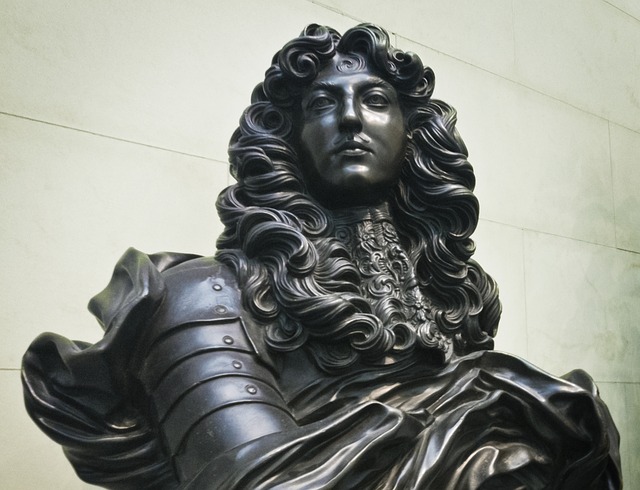
The absolutism it's a absolute government system, in which the can resides in a single person that commands without accountability a parliament or the society in general. Absolutism was very common from the century XVI until the first half of the XIX, when various revolutions overthrew him.
Although any government with total control of power could be considered absolutist, in the clear sense of the concept reference is made to the absolute monarchies who ruled Europe from the 16th to the 18th centuries.
Louis XIV was an exponent of absolutism.
Origins of absolutism
The origins of absolutism take place in France, where the divine right theory of royal power. This position assumes that certain people have been chosen by God to exercise the government. Even in the most radicalized versions, the monarch is considered as God himself.
Under this form of government, the king is the law, since it is who decides what things and how they can be done. Laws are dictated according to their interests and those of the nobility, who advise the king even though he always makes the last decision.
Characteristics of the absolutist monarch
Usually the absolutist king maintains a paternal treatment with the people, although it shows its despotism whenever it is necessary.
The absolutist king occupies his throne so lifetime. Power is hereditary: when the king dies, his son takes his place.
The king too run the church, especially its administrative part and what is related to wealth. Matters related to faith and beliefs are left to the clergy.
Beyond the fact that power is centralized in a single person, the absolutist regime has bureaucrats and public officials that are in charge of the correct operation of the system, ambassadors and delegates that sign trade and war treaties with other regions and a army that maintains order.
There is a phrase that has become extremely famous and that clearly defines this concept. It says "I am the State" and it has been awarded to Louis XIV of France who was calm on his throne because he knew that there were no legal limits or of any other nature that stood between his ideas and their practice.
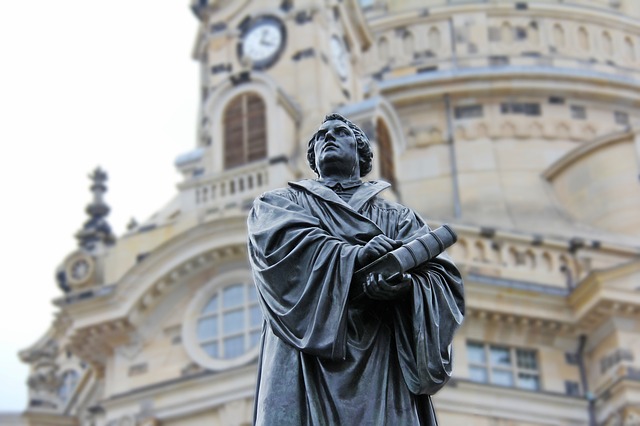
Martin Luther promoted a great religious reform.
Nationalism and institutional reforms
It is therefore important to clarify that in the 16th century there was a strong claim to the concept of national, which was fundamental for the foundation of absolute monarchies, where the president belonged to that territory and ruled over all of it. In addition, the king promised to build a National Church that would bring together all the inhabitants of the territory and watch over their moral interests. In any case, this last point could never be fully implemented, since many sovereigns remained faithful to the mandates of Rome. In any case, there were others who did not do it and in this way certain reforms in the church that would lead to the birth of the National Churches.
Those who spearheaded this nationalist movement were the sovereigns Luther and Calvin, who in their theory of the divine origin of royal power managed to separate themselves from what was established by the Roman church. With absolute power in their jurisdiction, monarchs could override the rights of entire peoples and thus exercised their absolutism. This concept that had arisen as the negation of feudalism, does not differ greatly from it: with a divine law and a natural law they controlled the actions of all the people.
Absolutism, revolution and dictatorship
As absolutism did not represent the interests of the people and the ruling class had been deeply divided from those who were ruled by it, various revolutions that would lead to the formation of the various States, made up of people from the community, who would represent their interests and who would not be separated from it.
Unfortunately, the lust for power and the abuse that human beings systematically make of it are always present, so despite the fact that absolute monarchies have been disintegrated, absolutist governments continue to emerge, dictatorships are an example of this.
Leave a Reply