
aboriginal
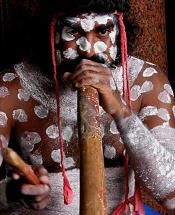
The concept of aboriginal make reference to someone or something originating from the soil in which they live. In this sense, you can name both a person (an aboriginal tribe) as an animal or a plant.
When the term refers to a person, it is used to name the primitive inhabitant of a territory, so it is opposed to those who later settled in the region.
The notion of aboriginal is used as a synonym for indigenous or original inhabitant. However, in its most specific sense, an indigenous person is a man that belongs to an ethnic group that preserves the traditional non-European culture. In general, an indigenous person belongs to an organizational tradition prior to the emergence of the Modern state.
On the other hand, Native Americans are often mistakenly called indians; a confusion that arose when Europeans first came to America and they believed they had arrived at India.
Different statistics indicate that, at present, there are about 350 million aborigines all over the planet. While some communities assimilated many customs from the Western world, others remain nomadic or maintain their ancestral ways of life. It is estimated that there are 5,000 villages with its own linguistic and cultural peculiarities.
Aborigines have been discriminated against and persecuted by Europeans and European descendants, even long after the conquest of America. A proof of this is that, just in 2006, South America had its first indigenous president: the Aymara Evo Morales, first president of Bolivia.
The Mapuche people
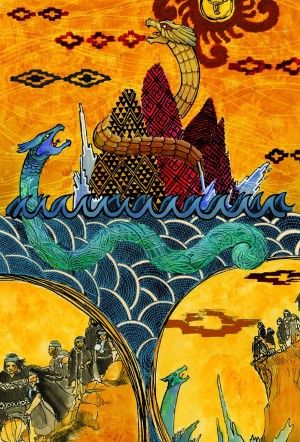
The Mapuches are an aboriginal people who have occupied the boundaries between Argentine and Chilean territory since the seventeenth century. It is a culture with a high adaptability, who have known how to settle in the different territories, taking advantage of the resources that the soil has offered them, and who have survived dozens of attempts at conquest, which still continue.
For a long time they practiced nomadism and in its roots and traditions this practice was fundamental; However, for about a century they have remained in the same territory due to the expropriation that the various governments have done about Patagonia. In addition, the land they inhabit seems to be shrinking more and more and threatening their subsistence as a people.
It is important to note that, being a very ancient culture, they have their own calendar which is governed by the cycles of the earth and indicates the various festivals. The year begins on June 24 because that day dawns after the longest night of the year has passed.
Talking about their believes, they are monotheites. Nguenechen is the name of his god, he is the creator of everything that exists and who dominates the earth and brings life and fecundity to all nature. They feel a deep adoration for the land and strictly respect its laws, without taking behaviors that could affect the balance of the environment. The relationship they establish with the land has a broad meaning, not only expresses a relationship linked to material subsistence it also implies their way of relating with supernatural forces.
It is an extremely rich and diverse culture that also has its own language, the mapudungun. It is composed of symbols and sounds that are transmitted from generation to generation orally and whose fundamental teaching resides in mythological legends and stories. It should be mentioned that today there are Mapuche dictionaries, although the words are represented by the letters of the Spanish alphabet, combined with auxiliary signs that allow the reproduction of the sounds of this language, which differ in some cases from those of Spanish. A graphemario called Azümchefe, in which the 26 graphemes are represented through various signs, where 6 of them correspond to vowels and 20 to consonants.
Leave a Reply