
abiotic
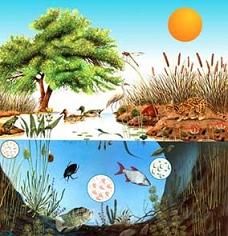
The notion of abiotic It is used in the field of biology to mention the environment that, due to its characteristics, cannot host any form of life. The term allows to name what is opposed to the biotic and what cannot be included within the group of living beings or their products. It should be noted that the letter to in front of a word indicates negation and, as the term biotic defines presence lifetime, abiotic refers to the opposite.
Various elements chemicals and physicists of the environment make the abiotic factors, while the Biotics they are born from living organisms and their creations. This means that the sun, air and water, among others, belong to the first group.
The important thing is to bear in mind that biotic factors are related to abiotic factors in order to survive. For example: a sheep (biotic) needs air (abiotic) and water (abiotic), among many other things, to live. A vegetable, for its part, also needs air to develop its photosynthesis and water and soil with various nutrients.
The abiotic components, on the other hand, they are in charge of the configuration of the so-called biotope(bios = life and topos = place), space with favorable conditions for the development of life; also receives the name of habitat. Instead, biotic components give rise to the biocenosis, grouping of various species who share life in the same space or habitat.
The biotope is the physical place that allows the development of the biocenosis. Experts divide it into hydrotope (hydrographic resources), edafotope (made up of the earth) and the climatope (weather conditions); all of them together allow the creation of a space where living organisms can subsist and reproduce, to ensure the survival of its kind.
If any of these resources were to be scarce, an imbalance could be generated in the harmony of the ecosystem. This is what is happening with global warming, when the continental ice melts; the lives of many species are endangered because the place that used to allow them develop and enduring becomes inhospitable. Polar bears, for example, have less and less space to live in and are slowly dying from it.
Abiotic evolution
It should be noted that the abiotic evolution or abiogenesisFinally, it is a doctrine made up of various theories that affirm that life can be formed starting from matters that are not living. The notion was coined by the British Thomas huxley (1825-1895) on 1870, as opposed to the idea of biogenesis.
Both terms refer to the origin of life from opposite positions: biogenesis affirms that life can only originate from organic matter, from elements that at some point have been alive, while abiogenesis indicates that it can also arise from matter inorganic.
These two theories are found in constant contradiction and the scientists of each doctrine they perform tests to demonstrate their position and discredit the opposing doctrine. For the moment, the most certain could be biogenesis, since it is believed that it is practically impossible for life to arise from an element that lacks it.
As various studies on the origin of the Universe have revealed, it can be said that all living organisms can only arise from germs of the same type and, therefore, never from inorganic matter. This leads us to affirm that abiotic elements alone cannot produce life; Yes, they can favor their development because, as we have said before, it is not possible for living organisms to survive if they lack the essential elements for growth: oxygen and water.
Leave a Reply