
abdominal
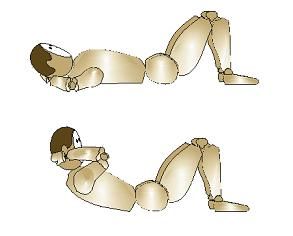
From Latin abdomen, the abdomen is a concept that refers to belly. In mammals, it is the body cavity that is limited by the diaphragm or the set of viscera of said region. In humans, the abdomen also allows naming of the adiposity, fat or prominent belly.
Abdominal, for its part, is that pertaining to or relating to the abdomen. We have, in this way, the abdominal fins, which are located in the abdominal region and correspond to the posterior extremities of the vertebrates terrestrial.
The abdominal aorta is the part of the aorta that goes from the orifice of the diaphragm to its bifurcation. The abdominal typhus or typhoid fever, on the other hand, is an intestinal infection that is produced by a microbe that causes lesions in the lymphatic plates of the small intestine.
A abdominal ultrasound is an imaging procedure used to examine the internal organs of the abdomen, such as the liver, spleen, pancreas, the gallbladder and kidneys.
Finally, the abdominal exercises They are routines of physical activities that are carried out with the aim of toning the muscles in the area. Before toning, it is necessary to eliminate the fat that covers these muscles, through aerobic exercise and a healthy diet.
There are different types of exercises, according to which muscles you want to tone. In this way, the lower abs, the oblique abs and the upper abs.
The interested party can carry out activities such as raising the trunk With or without support, the Abdominal Knee Pull, Suspended Knee Raise, Lateral Tilt, and Pelvic Rotation.
Dangerous abdominal exercises
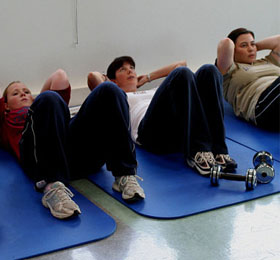
There are a number of abdominal exercises that involve a risk to the body, since they are not based on the shape and physiology of the abdomen; these are dangerous combinations of movements that result in efforts unnatural and that, as expected, they do not give the expected results. As if that were not enough, the abdomen is not the only affected area, since the neck and back are also involved in the process.
In principle, let's review the most common abdominal exercise: it consists of lying down and putting the legs in a fixed position, taking the head with the hands and raising the trunk until the knees touch the chest. In general, it is indicated to repeat this last movement ten times or more and take a short break, to start over and thus carry out as many sessions as possible. However, this series of steps, so common to many people, contains certain errors that can affect injuries of relative gravity.
Analyzing this exercise part by part, we first notice that the legs must remain fixed. When working with a companion, the latter supports the other's feet to prevent them from getting up; otherwise, a way is sought to hold them to a piece of furniture or a special machine for this purpose. The question that arises is "why is the legs given so much importance in an abdominal exercise". This "precaution" can affect the hips by blocking their rotation when raising the trunk.
Finally we have the neck; the hands must accompany the head during flexion, and in no way do they have to exert force on the nape of the neck. The latter is what beginners commonly do, especially when fatigue prevents them from continuing but they refuse to rest. Needless to say, exerting unnecessary force on the spine represents a great danger, which is why it is recommended to place your hands on the sides of the ears.
Leave a Reply