
The 3 types of angina pectoris (causes, symptoms and treatment)
It goes without saying that the human heart is the vital organ par excellence. It is the center of the circulatory system. The muscle whose function is to pump blood so that it reaches absolutely every corner of the body. Throughout our life, this heart will have pumped more than 200 million liters of blood through the more than 3,000 million beats made.
And although it is the strongest muscle in the body, capable of working without resting, pumping blood constantly at about 2 kilometers per hour so that all the cells of the body receive the necessary oxygen and nutrients, unfortunately, there are many pathologies that can affect more or less serious to its operation.
And in this context, diseases of the coronary arteries, those blood vessels that supply oxygen-rich blood to the heart muscle, are the most common pathologies that we can suffer from in the heart. Some pathologies that have, in the famous angina, their main symptom.
But what exactly are angina pectoris? What are your causes? What symptoms do they produce? What are your risk factors? What types are there? If you want to find the answer to these and other questions, you have come to the right place. In today's article we will explore the clinical bases of angina.
What is angina pectoris?
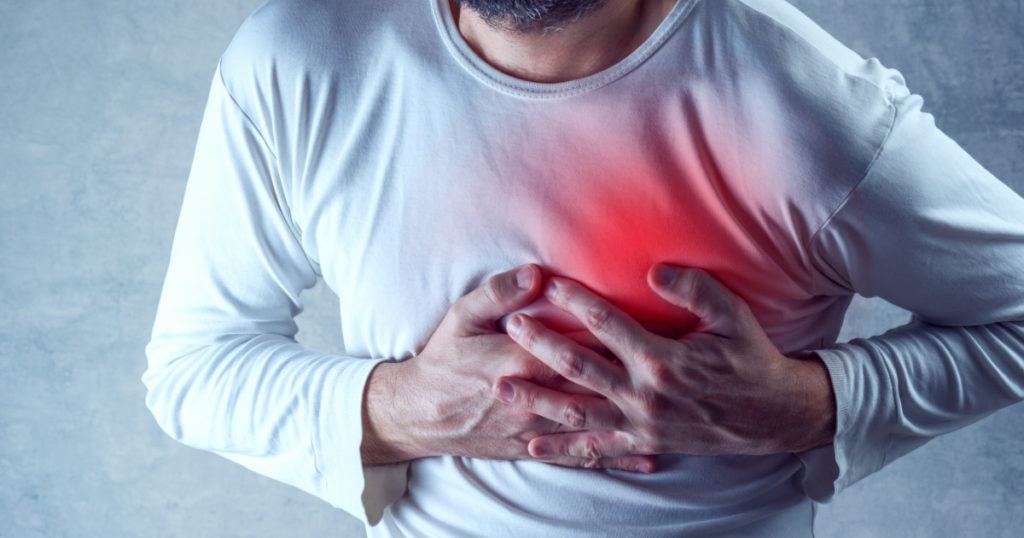
An angina is a discomfort or pain that is experienced in the chest due to a reduction in the flow of blood to the heart. In this sense, it is an oppressive pain in the chest that is felt when the blood supply to the heart muscle is, due to some pathology linked to the coronary arteries, insufficient.
It is for this reason that angina pectoris is considered a symptom of coronary heart disease, the most common type of heart disease. In it, the walls of the arteries that supply oxygen-rich blood to the heart harden and narrow due to the accumulation of cholesterol and other substances that make up the plaque on these walls. This situation is known as arteriosclerosis and, as it progresses, the blood flow becomes less and less.
The progression of coronary heart disease causes the heart muscle to receive less and less blood, something that can weaken the heart, increase the risk of cardiac arrhythmias or heart failure and / or cause a heart attack or, which is what interests us in today's article, angina pectoris.
And although the cause is this narrowing of the coronary arteries, the truth is that there are different risk factors that we must comment on: smoking, suffering from hypertension, suffering from hypercholesterolemia, being of advanced age (incidence peaks occur in men over 45 years of age and women over 55), have a sedentary lifestyle, suffer from obesity, suffer from diabetes, have a family history of heart disease and live with stress.
The general symptoms of angina pectoris are pain or a feeling of heaviness, burning, tightness, discomfort, swelling and / or pressure in the chest.Although it is possible that all these sensations are also transferred to the back, shoulders, neck, jaw or arms. And in addition, there are other clinical signs that can appear, such as fatigue, nausea, excessive sweating, shortness of breath and dizziness. It should be noted that women often experience other symptoms in addition to these, such as discomfort in the neck and jawbone, a stabbing pain in the chest instead of the typical tightness and abdominal pain.
And although it is true that these symptoms can be simple annoyances when doing activities that involve some effort, it should not be forgotten that angina pectoris can lead to a serious complication: a myocardial infarction. Therefore, in addition to preventing its appearance (avoiding, as far as possible, the risk factors that we have mentioned), we must put ourselves in the hands of a doctor to treat angina (actually, underlying coronary disease).
Treatment will depend on the situation, and may consist of simple lifestyle changes, the administration of medications (aspirin, statins, calcium channel blockers, nitrates, drugs that prevent clot formation ...) and, as a last resort if nothing has worked to alleviate the problem, surgical procedures such as angioplasty, coronary artery bypass surgery, stenting, or external counterpulsation.
What types of angina are there?
After this extensive but necessary introduction, we have understood the general bases of angina pectoris. But we must not forget that there are several variants with particular clinical manifestations and with a specific severity as well. So, next we are going to explore the different kinds of angina pectoris.
1. Stable angina pectoris
Stable angina pectoris is the most common variety and luckily also the mildest. It has an incidence that ranges, in men, between 0.7% (45-54 years) and 4.3% (85-89 years) and, in women, between 0.4% (45-54 years) and 4.2% (85-89 years). It has a regular pattern and can be easily treated with rest, lifestyle changes, and sometimes drugs.
It is a type of angina pectoris whose symptoms appear when the heart works harder than normal. Hence, people with coronary heart disease who express this variety of angina see that it is expressed when they exercise, play sports or even climb stairs.
Problems in the blood supply to the heart are not experienced at rest, but when we ask the heart to exert itself. In addition to the risk factors already mentioned, we should add heavy meals, emotional discomfort and low temperatures, without forgetting that it always arises after practicing physical activity.
It should be noted that the symptoms of chest tightness do not usually last too long. Most people have reduced clinical signs after less than five minutes, depending on whether they are resting and taking medication to treat angina.
As we have said, it is regular, so it can predict youhey, in addition, the pain that is felt is similar to other discomfort of the rib cage, so many times it is not even diagnosed. But be careful, because if the coronary disease progresses, we can enter the most dangerous form of angina: the unstable one.
2. Unstable angina pectoris
Unstable angina is the most dangerous variety not only because it is not regular, cannot be predicted, and can occur at rest, without doing physical exercise, but because it is a sign that the person could be about to have a heart attack. In addition, unlike the previous one, it does not disappear with rest or with medications.
It is less common than stable angina but more common than Prinzmetal, which we will discuss below. Be that as it may, in this case we are not limited to a reduction in blood flow to the heart muscle, but rather the coronary disease has progressed enough to obstruct, partially or totally and through clots, the blood vessels of the heart.
It is, therefore, an emergency situation that requires emergency treatment.. Rest and conventional medications for angina pectoris are useless. Here we are facing a very dangerous situation in which the plaque deposits in the blood vessels have broken or a clot has formed that has suddenly blocked the flow of blood to the heart, so if this situation is not resolved, the heart he may run out of oxygen, at which point the patient would suffer a heart attack and, obviously, his life would be in danger.
Symptoms of chest pain feel different, with clinical signs being more severe and lasting longer. If stable angina lasted less than five minutes, it tends to last for more than half an hour. Thus, in the face of unexpected angina with more serious symptoms that do not disappear with rest or medications and, above all, that has arisen without exercising, we must seek medical attention immediately.
3. Prinzmetal's angina
Prinzmetal's angina, also known as variant angina pectoris, is the rarest variety of angina. It tends to arise when the person is at rest (as unstable) and is usually severe, but can be relieved with conventional medications for the treatment of angina (as in stable). So, it is, in a way, of a mixture between the two previous varieties. It occurs in approximately 4% of patients with unstable angina.
In this case, the symptoms do not appear due to a greater demand for blood flow (as in stable) or by an obstruction of the coronary arteries (as in unstable), but rather by a sudden spasm of the blood vessels that supply blood to the heart. . This spasm, which tends to happen at night, temporarily narrows the artery in question, causing severe pain in the chest.
Described in 1959 by the American cardiologist Myron Prinzmetal, this variety of angina pectoris usually occurs in groups or cycles due to these vasospasms, which arise not so much from typical arteriosclerosis, but from involuntary contractions of the heart muscle. And to the conventional risk factors we should add the consumption of drugs that tighten the blood vessels (such as drugs to treat migraine headaches) and cocaine.
Leave a Reply