
The 4 best exercises (of Kegel) to strengthen the Pelvic Floor
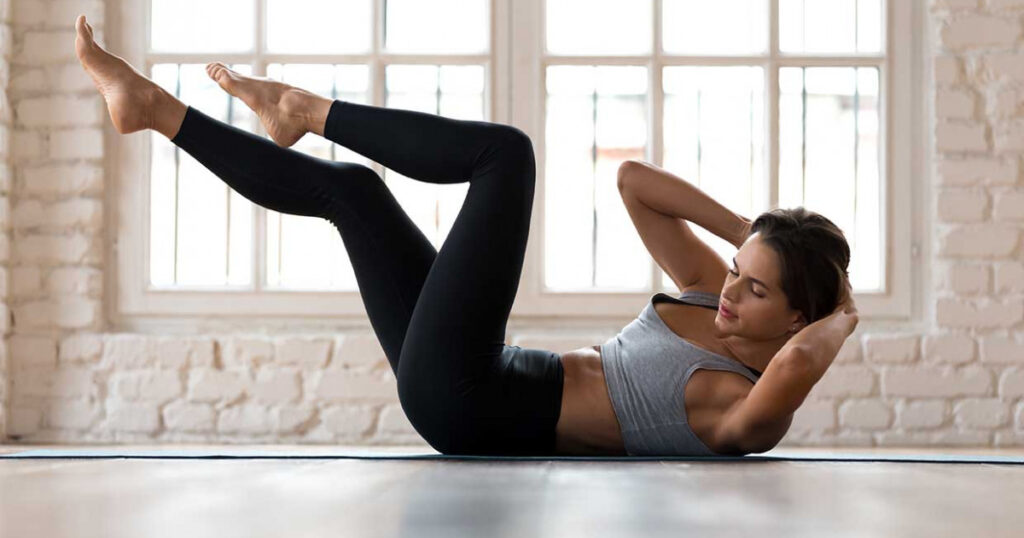
Currently there is a general awareness of the importance of taking care of the body through physical exercise. Thus, it is known that strengthening our muscles and moving frequently is an important requirement to enjoy an optimal state of health. However, there is a very neglected part of the body in this sense and that, paradoxically, is of great importance for well-being, especially in the case of women. We are talking about the pelvic floor.
The pelvic floor is a set of muscles and ligaments that surround the lower part of the abdominal cavity. Its essential function is to support the organs in the area (bladder, urethra, vagina, uterus...) so that they function properly.. Although this must maintain certain levels of tension that guarantee support, it has a dynamic character that allows it to adjust to movement. However, sometimes it can get too weak, and that's when health problems start to appear.
The importance of strengthening the pelvic floor
Chen the pelvic floor is poorly strengthened, some warning signs may appear, such as urinary and/or fecal incontinence, pain or even prolapse of the organs in the area, which causes a descent or displacement of the same due to the lack of tension. The truth is that problems related to the pelvic floor are more common than is believed. There are some health conditions that can increase the risk of weakening this muscle group. These include childbirth, obesity or smoking.
The good news is that this problem is reversible and can be alleviated. Unless the weakening is severe (which will require surgery), the ideal treatment option is to perform exercises to strengthen the pelvic floor. This rehabilitation work will return to this area the strength and tension necessary for the proper functioning of the body. In this article we are going to review the best exercises you can do to strengthen your pelvic floor.
What is the pelvic floor?
The pelvic floor is a set of muscles and ligaments that are located in the lower part of the abdominal cavity.. Its main function is to adequately support the organs of the pelvic area, which are essentially the bladder, uterus, vagina and rectum. This allows the body to function normally.
The shape of the pelvic floor resembles that of a suspension bridge. One end is located at the sacrum (the end of the spine) and the other at the pubis. The ligaments in this area allow the bridge to have the necessary firmness so that the pelvic organs can function normally.
One of the essential characteristics of the pelvic floor is that it is dynamic. Far from being a rigid structure, it is able to adapt to our movements and postures without losing the necessary firmness. However, as we have mentioned, sometimes certain health conditions can cause the tension of these muscles to weaken too much, generating alterations in the function of the organs involved that lead to urinary incontinence, prolapses, back pain or sexual dysfunction.


Why is the pelvic floor weakened?
The pelvic floor can be weakened for different reasons. Among the most common are the following:
- Natural birth: The effort involved in expelling the baby through the vaginal canal can seriously weaken the muscles in this area.
- Menopause: This period in a woman's life can cause atrophy of these muscles and vaginal dryness, so taking care of the tone of the pelvic floor becomes especially important.
- Chronic constipation: When this problem is suffered, defecation requires a great forceful exercise, which sometimes causes loss of pelvic floor tone.
- high impact sport: Some sports such as volleyball or running can favor the weakening of this group of muscles.
- Overweight and obesity: Excess weight contributes to overloading the pelvic floor muscles and makes incontinence problems more likely.
- smoking: Tobacco is the enemy of our health, and the pelvic floor can be seriously weakened due to this substance.
What are the best exercises to strengthen the pelvic floor?
We are going to know the main alternatives to strengthen this group of muscles.
1. Kegel exercises
Regardless of why your pelvic floor has weakened, the important thing is adopt measures to restore to this area of the body the tone it needs. A widely used alternative to achieve this goal is the performance of the so-called Kegel exercises.
These consist of a set of movements that allow you to strengthen the pelvic floor muscles to solve incontinence and other problems derived from the weakness of this area. To perform Kegel exercises, it is recommended to proceed as follows:
-
Identify the right muscles: Talking about the pelvic floor can be ambiguous and detecting which muscles are affected is not easy. To achieve this you can try to urinate and stop urination in the middle. The muscles that allow you to do this are the ones that are part of this area.
-
Practice: Once you have achieved the previous step, it is time to get down to work. To do this, you can imagine that you are sitting on a marble and that you want to lift it by contracting your pelvic floor. Begin by holding the contraction for three seconds, then rest. It is important that you do not flex other muscles (abdominals, glutes...) and that you do not hold your breath while doing the exercises. Try to focus exclusively on the pelvic floor and breathe normally.
-
Strengthen the exercises: These exercises are useless if you only do them once. The key is that they become a habit and become part of your routine. Try to do at least 3 sets of 10-15 repetitions each, every day.
It is important to note that these exercises should not be done at the time of urination except for the first step. This can cause problems emptying the bladder properly and increase the risk of urinary tract infection. To put Kegel exercises into practice, nothing special is necessary, since you can carry them out at any quiet time, whether you are sitting or relaxing on the sofa.
Although these guidelines can be helpful, sometimes doing the exercises by yourself can be difficult. If you need some advice and want to make sure we perform well, you can consult this matter with a health professional. In any case, we cannot forget that these exercises require a lot of training, since it is not easy to isolate and work the correct muscles from the beginning.


2. Devices (to perform Kegel exercises)
Although manual exercises can be useful, devices designed to perform these exercises in a simpler way have appeared on the market. Thus, you will be able to know if you are really carrying out your exercises well and you will even be able to regulate the levels of difficulty, plan your exercise routines and see how you progress in your achievements week after week. Among the devices that you can find within this category, the following stand out:
2.1. vaginal cones
This device has a certain degree of weight, and allows you to work the muscles of the area when inserted into the vagina. Once it is inserted into the body, the woman must contract her pelvic floor in order to keep it in place, maintaining that contraction for 15 minutes, twice a day. Improvement is usually seen after 4-6 weeks.
2.2. Chinese balls
This device is made up of two balls joined by a cord, inside which there is another smaller ball that collides with the walls of the ball that contains it when worn. The woman must insert the balls into her vagina and moveso that the internal balls collide with the walls of the external ones, which generates a vibration that produces an involuntary contraction of the muscles in the area.
23. smart devices
On the market there have been many smart gadgets that act as real personal trainers. They are usually made of materials such as silicone and have ergonomic designs that fit the shape of the vagina. They usually work with batteries and can even be connected to your mobile device to regulate the difficulty and check that the exercises are being done correctly.
Whichever option you choose, performing Kegel exercises is a long-distance race. You must cultivate patience, because the effects of this training will become visible after several weeks and even months, not immediately. Of course, the results will be proportional to your perseverance and dedication. The benefits you will see are:
- If you are pregnant, doing these exercises will make labor easier when you give birth. In addition, you will be less likely to leak urine and your postpartum recovery will be much faster.
- If you suffer from urinary and/or fecal incontinence problems, Kegel exercises will alleviate this problem.
- If you are going through menopause, these exercises will reduce the impact of hormonal changes on the pelvic area.
- If you practice high-impact sports, these exercises will help you avoid damage to this muscle, which can lead to urinary incontinence and even sexual dysfunction.
- On a sexual level, toning the pelvic floor will help you enjoy much more satisfying sexual relations.


Leave a Reply