
Microglia: characteristics and functions (in 10 keys)
The immune, immune or immunological system is one that is designed to, thanks to the synergy between the cells and structures that constitute it, detect and neutralize all those chemical substances or biological particles whose presence inside our body can cause damage. Thus, the immune system is made up of different cells that patrol our body and that, if their action is necessary, trigger the attack processes against foreign substances.
Absolutely all the organs and tissues of our body must be protected through this immune system. And, therefore, the brain, the body's command center and one of the most sensitive structures that receives the greatest mechanical protection, cannot be an exception. And this is where the protagonist of our article today comes into play: microglia.
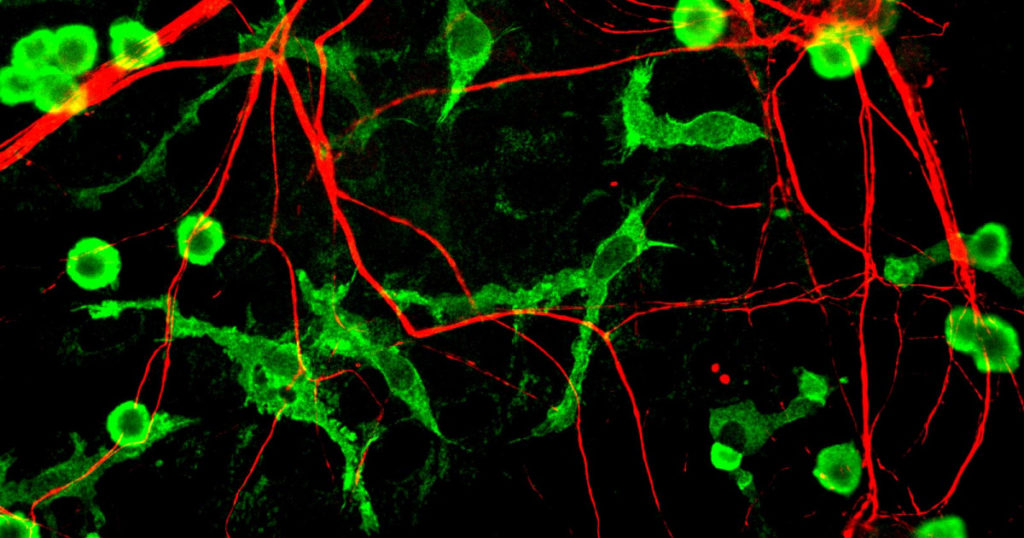
The microglia is the set of cells that act as phagocytes in the brain, phagocytizing the foreign elements present in the central nervous system and repairing the damage to the nervous tissue. It is, in simple words, the loan of the immune system to the central nervous system, being the neuroglial cells (present in the nervous tissue but exerting complementary functions not associated with the transmission of impulses) that represent the main immunocompetent elements in the brain.
Thus, in today's article and, as always, from the hand of the most prestigious scientific publications, we are going to analyze in an extensive but concise way the nature of the microglia, perfectly understanding what it is, what its characteristics are and what functions it performs in the central nervous system. Let us begin.
What is microglia?
The microglia is the set of immunocompetent cells of the nervous tissue that, constituting 10% of the brain cells, develop immune protection functions in the central nervous system.. This microglia is constantly monitoring the brain tissue, and when there is an infection in it, it is activated and, warning other immune cells, triggers the immune reaction.
Thus, microglia is one of the elements within the group of glial cells, which are all those cells present in nervous tissue but which, unlike neurons (the cells of nervous tissue as such), do not participate in transmission. electrical signals, but they exercise complementary functions, constituting an interneuronal matrix where there are different cell types.
Within these glial cells we have the oligodendrocytes, the radial glial cells, the astrocytes and, of course, the microglia, which is what interests us today. This microglia are the cells that, coming from the bone marrow, penetrate the nervous system in the neonatal period, developing immune functions in the central nervous system.
Microglia cells are specialized in immune defense and in the phagocytosis of elements that are potentially harmful or represent threats to brain neurons. These are the smallest glial cells, although they are considered very versatile due to their ability to vary their morphology according to the functions they have to perform, the chemical signals they receive from the neurons with which they communicate, and the exact area of the nervous system in the area. that they are.


Be that as it may, these cells, which are found throughout the entire central nervous system (that is, apart from the brain, they are also found in the spinal cord), are small cells, with scant cytoplasm, with short and irregular processes, of dark staining, with an oval or triangular nucleus and relatively similar in shape to oligodendrocytes, other glial cells.
Under normal physiological conditions, this microglia patrols the brain, cleaning cellular debris from neurons. and phagocytizing cells that are in a state of apoptosis (programmed cell death), but when severe neuronal damage occurs such as a bacterial or viral infection, neurons activate this microglia.
At that time and depending on the needs, it can be activated in two ways: M1 or M2. On the one hand, the pro-inflammatory form (M1 state) is one in which the microglia respond to neuronal damage by producing cytokines, molecules that induce tissue inflammation, and chemokines, molecules that stimulate the infiltration of leukocytes (white blood cells). lymph and blood) to the central nervous system to fight infection.
On the other hand, the anti-inflammatory form (M2 state) is one in which the microglia respond to damage with the secretion of molecules with anti-inflammatory effects, something that is needed when you want to facilitate phagocytosis of cellular debris and stimulate tissue repair brain and womb reconstruction, increasing the survival of nerve cells.
Since its discovery and identification in 1920 by the Spanish neurohistologist Pío del Río Hortega, a disciple of the great Santiago Ramón y Cajal, we are still making progress in the study of this network of cells that completely covers the brain, forming a network of microglia that fulfills essential functions in the central nervous system and that we are going to detail below.


What are the functions of microglia?
As we have seen, microglia is the set of glial cells that, having their origin in the bone marrow and penetrating the interior of the nervous system in the neonatal stage, have the essential role of acting as the immune component in the brain and spinal cord. . But to say that they are the loan of the immune system in the central nervous system is an understatement. We must contemplate all the nuances and inspect all the functions that these microglia cells perform in our brain.
1. Foreign body phagocytosis
The main function of microglia. These cells are capable of developing phagocytosis functions when activated, that is, surrounding solid particles with their membrane and introducing them into their cytoplasm to, thanks to the lysosomes they contain, degrade what they have "swallowed". This is a key immune function as microglia engulf cell debris, toxic substances, apoptotic (dead) cells, and also bacterial or viral pathogens, thus protecting the central nervous system.


2. Alert leukocytes in case of infection
In the event of an infection in the central nervous system, the microglia cells, activated in their M2 state by neighboring neurons, begin to synthesize and release chemokines, molecules that stimulate the infiltration of leukocytes (cells of the immune system present in lymph and blood) to combat said infection.
3. Patrol the central nervous system
Even when they are not active since there is no emergency situation, the microglia cells are not completely inactive. They are constantly patrolling the central nervous system, repairing minor neuronal damage and removing cellular debris that could be toxic to neurons. They are our "guards".
4. Repair neuronal damage
As we have just mentioned, one of the main functions of microglia is to repair these injuries after nerve tissue is damaged. They develop different roles to promote the regeneration of neuronal tissue, in order to maintain an optimal nervous physiology at all times. They help rebuild the neural matrix after it suffers damage.
5. Maintain homeostasis
Thanks to its role in repairing nerve damage, microglia are also very important in maintaining homeostasis, that is, in make the central nervous system a stable and relatively constant environment in its physicochemical parameters. In this way, microglia are essential for neurons to be in an optimal environment.


6. Present antigens
As we have said before, the microglia, in case of brain infection, stimulate the leukocytes to cross the blood-brain barrier and reach the central nervous system to fight the infection. But for this process to be effective, the microglia cells themselves act as antigen-presenting cells so that the T lymphocytes find it quickly and neutralize the microbial threat before the damage is irreversible.
7. Destroy harmful cells
Microglial cells are also endowed with the ability to stimulate cytotoxicity, a process used to destroy harmful cells (such as bacteria or viruses) by synthesizing and releasing nitric oxide and hydrogen peroxide. Although very effective in killing pathogens, this cytotoxic process is also damaging to healthy nerve tissues.
8. Stimulate inflammation
As we have said, in their activated M1 state, microglial cells synthesize and release pro-inflammatory cytokines, which are molecules that stimulate inflammation processes in response to infection and are so important, despite the side effects they have on healthy tissues, to fight said infection.
9. Remap the neural circuit
Due to its role in rebuilding and regenerating neuronal tissues, the latest research indicates that microglia could be very important in what is known as remapping of the neuronal circuit, that is, it could play an essential role when it comes to determine the synaptic circuits through which neurons communicate.
10. Reduce inflammation
After inflammation, to avoid damage to healthy neuronal tissues, it is very important that anti-inflammatory processes are stimulated. And the microglia cells themselves are responsible for this, synthesizing and releasing anti-inflammatory molecules that reduce tissue inflammation in order to repair brain tissue, rebuild the neuronal matrix and eliminate cellular debris.


Leave a Reply