
The 5 differences between Dementia and Alzheimer's (explained)
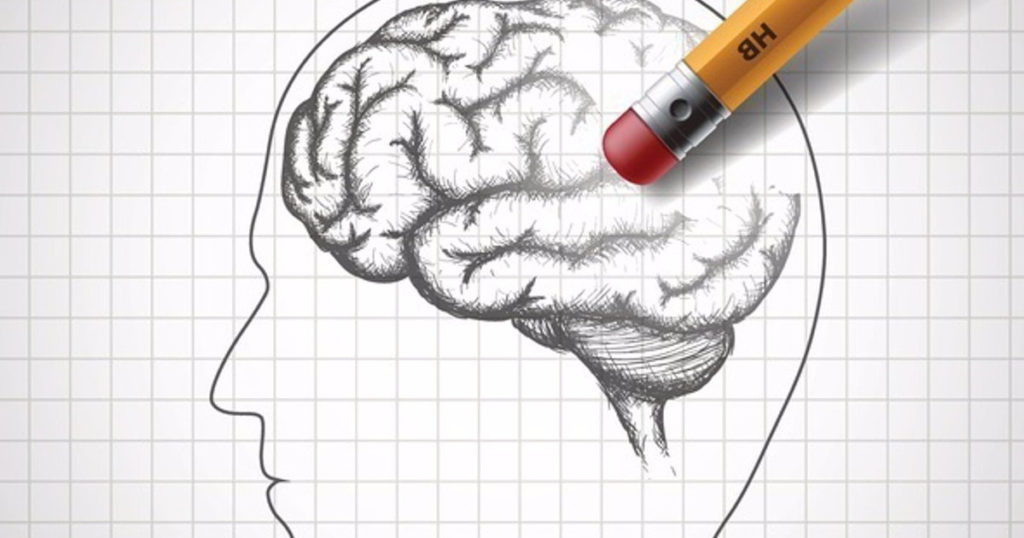
The passage of time is inevitable. As is the fact that the organs of our body, after a lifetime of regenerating from damage, begin to suffer the consequences of aging. This means that there is a whole group of diseases associated with old age, among which stands out, unfortunately, dementia.
It is estimated that in the world there are about 50 million people diagnosed with dementia, something that represents a diagnosis of more than 8 million new cases annually. And we are facing a clinical condition that so seriously alters memory, social skills and thinking that the patient loses, to a great extent, their autonomy.
Along the same lines, it is estimated that, from 65 years of age, dementia affects 2% of people, with the incidence reaching 20% when they reach 80 years of age. All of this makes dementia scary. And fear, as always, leads to the implantation of taboos, stigmas and, of course, ignorance. And from this ignorance arises a very common error, which is to think that "dementia" and "Alzheimer's" are synonymous. They are not.
So, in today's article and with the intention of answering all the questions you may have about this topic, we are going to review the clinical bases of dementia and Alzheimer's, the disease that represents the leading cause of dementia in the world. And, in the same way, we will go over, in the form of key points, the main differences between terms. Let us begin.
What is dementia? And what about Alzheimer's?
Before going deep into the differentiation of concepts and seeing these differences in the form of key points, it is interesting (and also very important) that we put ourselves in context and understand, individually, the clinical bases of both concepts. Therefore, below, we are going to define as concisely as possible what is dementia and what is Alzheimer's.
Dementia: what is it?
Dementia is a loss of brain function that occurs as a result of the development of various neurological diseases. It is a clinical condition associated with damage to the central nervous system, causing the patient to affect their memory, reasoning, behavior, understanding, speech, orientation, coordination, control of emotions, thinking and social skills.
Thus, by dementia we understand all those symptoms that emerge from the incidence of a neurodegenerative pathology that affects the physiology of the brain. It is not a question, then, of a disease as such, but of the manifestation of neurological disorders of a different nature that, yes, are expressed with the aforementioned clinical signs.
With an incidence of 2% between 65-70 years and 20% among those over 80 years, dementia is the leading cause of disability in the elderly. And in addition to the cognitive alterations that we have detailed, it also manifests itself with psychological changes such as depression, anxiety, hallucinations, agitation, paranoia and inappropriate behaviors.
The cognitive and psychological impact depends on the affected brain area and the impact of these damages, so dementia varies depending on the specific neurodegenerative disease behind it. And it is that although it is always due to progressive degeneration of brain neurons, the exact nature varies greatly between pathologies.
Even so, what is clear is that in order for dementia to be diagnosed, symptoms must be progressive and irreversible. And there are situations such as infections, poisonings, development of brain tumors or hypoxia that can trigger brain damage that is expressed with symptoms very similar to dementia. But in this case, they are transitory and reversible, so we cannot speak of dementia.
To speak of dementia as such, there must be a neurodegenerative disease behind it. And although there are various pathologies that can cause a progressive deterioration of neurological health, the main cause of dementia in the world is more than clear: Alzheimer's disease. And it is time to talk about it.


Alzheimer's: what is it?
Alzheimer's is a neurodegenerative disease that represents the main cause of dementia in the world. It is a pathology in which a progressive and irreversible deterioration of brain cells is observed, thus causing a slow but continuous loss of mental abilities that lead to the symptoms of dementia.
If, as we have said, there are about 50 million cases of dementia in the world, studies indicate that between 50% and 70% of these could be due to Alzheimer's. We are facing a disease in which brain neurons gradually degenerate until they die, so damage is observed in physical, behavioral, social and cognitive abilities.
It appears practically always after the age of 65, causing the patient to lose the ability to live independently. After several years of silent development and a first stage in which the symptoms are difficult to perceive, the clearest manifestations begin: memory impairment (first, the short-term and, in advanced stages, the long-term), speech, behavior, control of emotions, sociability, understanding and, ultimately, all the characteristics of dementia.
As a last resort, when neuronal damage is such that the brain is unable even to maintain stable vital functions, the patient, who has already completely lost his autonomy, his memories and the ability to communicate, dies from Alzheimer's.
And as it happens, unfortunately, with the rest of neurological diseases, neither we know exactly their causes (so it cannot be prevented) nor is there a cure. For this reason, the current treatments and medications that are available to us cannot prevent the disease from progressing to the fateful outcome. But, at least, they can temporarily improve the symptoms so the person can maintain their autonomy for as long as possible.


How are dementia and Alzheimer's different?
After having extensively analyzed both concepts, surely both their relationship and their differences have been more than clear. Even so, in case you need (or simply want) to have the information with a more visual nature, we have prepared the following selection of the main differences between dementia and Alzheimer's in the form of key points.
1. Alzheimer's is a disease; dementia, no
Without a doubt, one of the most important nuances. Alzheimer's is a neurodegenerative disease that causes the slow but continuous degeneration of brain neurons, a pathological condition that results in the loss of physical, cognitive, behavioral and social skills and, ultimately, the death of the person. It is, therefore, a disease as such.
However, dementia is not described as a disease itself. And it is not a pathology with a specific etiology, but a consequence of the development of diseases that present with similar cognitive symptoms. Thus, more than a disease, dementia is a concept that describes the loss of brain function due to a neurological disease.
2. Alzheimer's is the main cause of dementia
A difference that also makes their relationship. As we have said, dementia is a term that describes the symptoms caused by the loss of brain function due to the development of a neurological disease. And, statistics in hand, the neurodegenerative disease behind most cases of dementia is undoubtedly Alzheimer's. If 50 million people suffer from dementia in the world, up to 70% of the cases could be due to Alzheimer's.


3. Not all people with dementia suffer from Alzheimer's
From the previous point we can deduce that, although Alzheimer's is the main cause of dementia, not all people who suffer from dementia suffer from this disease. There are other disorders that present with the irreversible and progressive neurological damage that make up the symptoms of dementiasuch as Huntington's disease, Creutzfeldt-Jakob disease, vascular dementia, Lewy body dementia, Pick's disease, etc.
4. Dementia is not a direct cause of death; Alzheimer's, yeah
The dementia describes the cognitive and behavioral disturbances that a person with a neurodegenerative disease experiences. Therefore, despite the fact that people with dementia end up dying (with a life expectancy that, on average, is between 8 and 10 years, although the range is between 3 and 20 years), they do not die from dementia in yes, but because of the underlying illness. It is the neurodegenerative pathology that is responsible for the death, not the dementia. Remember that dementia is not a disease as such.
5. There are reversible and transient forms of "dementia"
As we have said, for dementia to be considered as such, the symptoms must be progressive and irreversible, something that happens, for example, with Alzheimer's. Even so, there are other clinical conditions that present with the same (or very similar) symptoms of dementia but that are reversible and transitory, as occurs with infections, poisonings, development of brain tumors or hypoxia.
Leave a Reply