
How does gender violence affect children?
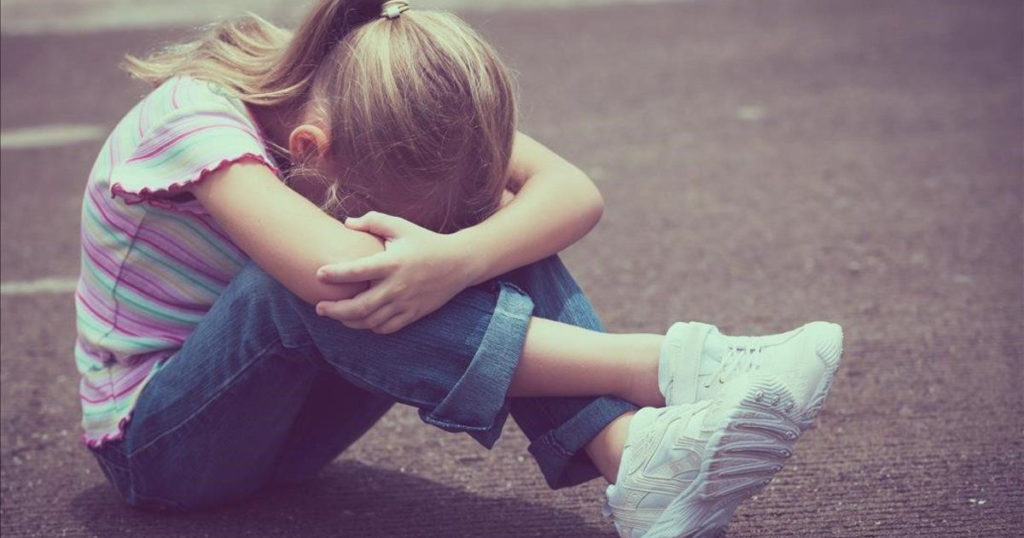
Gender violence is a type of physical, psychological, sexual and institutional violence, exercised against a person or group of people because of their gender, sex, orientation or sexual identity. In a broad sense, the United Nations (UN) considers that gender-based violence includes violence and discrimination against women, but also that directed at LGBT people, misogyny and sexism.
This type of violence can manifest itself in very different ways, such as threats, attacks, deprivation of rights and freedoms, among others. In addition, it is present in all areas, such as the family, education, the media, the work environment, sexuality and, on a more global level, in the State itself.
Within the broad field that gender violence encompasses, there is a very specific subtype of violence, which is intimate partner violence. Although violence in relationships can also be suffered by men, it is a problem that affects mostly women.
There is no doubt that we live in a patriarchal society, where in a more or less manifest way the woman is considered inferior to the man. The existence of these erroneous social beliefs about the role of women in the different spheres of life play a decisive role in the initiation and maintenance of gender violence in intimate relationships.
What is gender violence?
One of the great problems with intimate partner violence is that it starts in an insidious way. Thus, it rarely begins in the form of explicit blows or assaults. Often times, the relationship stems from dynamics in which the aggressor controls the victim in various ways (convincing her not to see her friends and family, checking her phone, controlling expenses, telling her how she should dress…).
Progressively, this type of psychological violence can begin to become more visible, appearing insults or verbal threats that generate fear in the victim, who is increasingly self-conscious and subjected to his partner. Violence naturally tends to escalate and increase. For this reason, over time many times physical attacks end up that can turn into authentic beatings and end, in the most serious cases, with the murder of the victim.
In addition to physical and psychological violence, many women can also experience intimate partner sexual violence. This may involve blackmail or pressure to have sexual relations, in some cases leading to violations in which the woman is forced to have sex without wanting to. Once a woman has been trapped in a relationship with these characteristics, it is really difficult for her to get out. This is explained because the so-called cycle of violence occurs, which was described for the first time in 1979 by the psychologist Leonor Walker.
According to his approach, in gender violence relationships a series of stages alternate that are repeated in the form of a cycle. A phase of accumulation of tension can be observed, in which the aggressor considers everything that his partner does as a provocation, being able to be distant and cold. This is followed by a violent explosion of all that tension, in which the attacks themselves appear, whether verbal or physical.
After the violence, it is very common for a “honeymoon” stage to take place, in which the aggressor shows apparent regret for what happened, promises that it will not happen again and that it will change. This can be affectionate and attentive, the relationship seems to be in an idyllic moment. However, as he makes sure he has been forgiven, he takes control of the situation and begins the cycle again with the accumulation of tension.


One of the peculiarities of this vicious circle is that each time it repeats itself, the phase of tension and violence prevails over the honeymoon phase. The victim feels more and more dependent, is more isolated and more weakened to fight. In addition, she is increasingly integrating the idea that she is the culprit of the aggressor's outbursts of anger. Fear, shame, guilt, emotional dependence, justification for the aggressor's acts (stress, alcohol ...), economic dependence or lack of social support are some of the factors that prevent a woman who is a victim of violence from gender leave the relationship.
The consequences of this type of violence for the woman who suffers it are devastating. The victim feels incapable of making decisions, assumes that he deserves the treatment he receives, feels guilt, anxiety, questions his way of being, withdraws from his loved ones and, ultimately, finds himself subject to his partner in all aspects possible.
Although the pain and suffering of abused women is indisputable and must be recognized, sometimes they are not the only ones affected by gender-based violence. When minors are involved, they witness (and also feel) violent dynamics and see their mother suffer at the hands of the aggressor, who is often their own father and towards whom they can feel a marked ambivalence. For this reason, they too must be recognized as victims.
However, this has not always been the case. Until recently, minors were considered mere witnesses, but not direct victims of this scourge.. However, studies in this regard have made it possible to understand the profound impact that gender-based violence has on children and adolescents. The importance of acknowledging their suffering is crucial, as this way they can receive the psychological care they need to heal the aftermath of this traumatic experience.
Consequences of gender-based violence on children: victims, not witnesses
As we have been commenting, until very recently minors were not recognized as victims of gender violence suffered by their mothers. They were simply believed to be witnesses who were not experiencing first-person violence. Thanks to research in this regard, much more is known about how this experience affects minors, which has made it possible to recognize their status as victims, as well as their need to receive specialized psychological care.
The truth is that the scope of this violence is such that, many times, the effects are observed even though the minors were not present in the attacks themselves. This is explained because violent dynamics alter the state of the family, generate tensions and create roles with power distributed asymmetrically between the mother and the aggressor.
Children see their reference adults as the emotional guide to follow. When the mother suffers violence, her psychological state prevents her from responding in a healthy way to the needs of her children, it can generate important effects on their mental health that are not alien to the children and all this affects the bond that unites them. Some studies have found that, already in pregnancy, the mother's exposure to gender-based violence can affect the growth of the fetus.
According to Graham-Bermann and Levendosky (2011), the sequelae of exposure to gender-based violence occur at all stages of development and include physiological, emotional, cognitive and behavioral aspects. In addition, these are manifested in relationships with peers, with parents, authority figures, the couple and society in general. Let's get to know some of them:
1. First years: 0-2 years
The smallest kids may develop an insecure attachment style, which can be avoidant, ambivalent and even disorganized. The feeling of having been emotionally abandoned may appear, preventing them from trusting others and establishing healthy bonds with them. In addition, at this age emotional discomfort is usually expressed in the form of irritability.
2. Infant: 2-6 years
In children of infant age disturbances in your stress response system may occur. This can generate a marked emotional reactivity, and in some cases Post Traumatic Stress Disorder (PTSD) may develop. This affectation can also give rise to behavioral problems of various kinds.
In addition, in this age group there may be a deterioration in cognitive abilities, and the IQ may be reduced. Impairment of explicit memory may also appear, as well as poor verbal skills. It is common that there are difficulties in integrating standards and limits, as well as to acquire basic self-care habits.


3. School age: 6-12 years
At this age we also observe the maladjustment of the stress response system that we discussed previously. Post-traumatic stress symptoms can become chronic at this stage, being able to establish problematic behavior patterns, such as hyperactivity.
Due to the type of behavior models that have been learned at home, aggressive behaviors towards others may appear, with difficulty in complying with the rules. Social isolation and emotional states of sadness, anxiety, depression, as well as feelings of guilt can also occur. At an academic level, performance can be diminished and low self-esteem can be observed.
4. Adolescence: 12-18 years
In adolescence, victims may show more severe problems, a consequence of having experienced gender violence for many years. PTSD symptoms can get complicated and set up a complex trauma picture, leading to somatizations that alter physical health.
Adolescents who experience gender-based violence at home may find it difficult to form healthy relationships with their parents, developing little trust towards others. A curious phenomenon known as parenting can occur, whereby minors reverse roles with their parents and act as if they were adults in charge of caring for their parents.
This is because they have lost their childhood due to violence, which has forced them to acquire maturity and awareness of reality too early. Some adolescents may show externalizing patterns, by which they express their discomfort towards others in the form of anger. Sometimes the anger is directed at the aggressor, but other times at the mother for not having protected them. It is common for risky behaviors to appear, such as the consumption of substances such as alcohol or other drugs.
Leave a Reply