
The 20 types of lettuce (characteristics and properties)
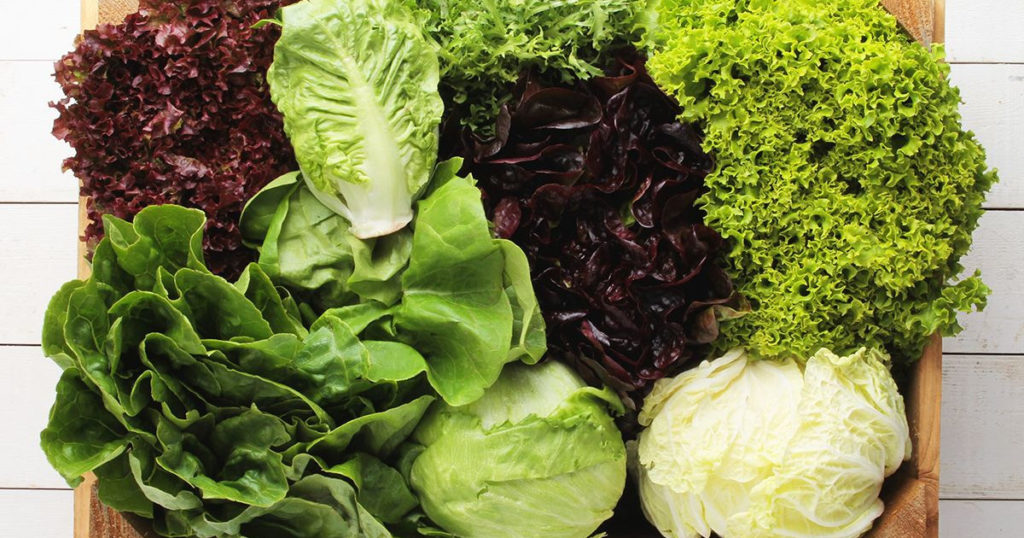
27 million tons. This was, according to figures taken from the portal Statista, the world production of lettuce in 2019, with China, the United States, Spain, Italy, India, Japan and France as the main producers of this vegetable. A vegetable that, as we see with this immense number, is one of the most cultivated and consumed in the world.
Lettuce is a herbaceous plant that is cultivated as food and that is typical of the semi-temperate areas of the Earth, although the possibility of production in greenhouses has made it possible to grow it practically anywhere in the world. The mainstay of salads and a food present in many dishes, especially Mediterranean cuisine.
And it is believed that the history of mankind with this plant goes back a long way. Lettuce was first cultivated in Ancient Egypt, when the Egyptians, by artificial selection, obtained a plant from which they could eat its leaves. The first evidences of its cultivation date, then, from approximately the year 2680 BC.
However, Are all lettuces the same? No. Not much less. Over time, many varieties have been developed, each with unique properties and characteristics. And in today's article, so that you discover all the varieties with which you can make incredible dishes, we are going to see what types of lettuces exist.
What is lettuce?
Lactuca sativa, better known as lettuce, is an annual plant that is grown as a vegetable to consume its leaves. It is, therefore, a herbaceous plant that is grown in semi-temperate areas, although it requires relatively low temperatures so that it does not flower too quickly. But be that as it may, it is a staple not only in salads, but in other dishes such as sandwiches, sandwiches, wraps, soups, and even grilled or garnished.
One of the characteristics that has most allowed the development of all the varieties that we currently have is that it is easily crossed within the species, so genetic crosses can be artificially stimulated to obtain new varieties.
At the nutritional level, lettuce does not stand out for its nutritional value, since between 90% and 95% of its composition is water. Therefore, it has few properties. Even so, there are varieties that are a good (and even fantastic) source of vitamin K, vitamin A and, to a lesser extent, folic acid and iron. But, as we say, the use of this plant has more to do with culinary charm than with its nutritional properties.
Lettuce, in any of its varieties, is usually consumed raw (previously washed, as it can be a source of bacteria and other pathogens), seasoned and mixed with other ingredients, providing that freshness and texture so characteristic that it allows to obtain light dishes but with personality. . Hence, it is a plant that is produced so much worldwide.
What varieties of lettuce are there?
Lettuce designates a single species, Lactuca sativa, but as we have said, many different varieties have been developed due to the ease of making crosses between them. Thanks to this, we have many different types of lettuce on the market, each with unique organoleptic characteristics. Let's see, then, what varieties of lettuce exist so that you can discover new ingredients for your dishes.
1. Iceberg
One of the most popular varieties. Iceberg lettuce has a compact sphere shape and it is especially resistant to cold. It has many long, thin green leaves that are attached to the main stem. Its harvest time is between June and August, being typical of the Mediterranean climate.
2. Batavia
Batavia lettuce has light green leaves, curly in appearance and with a meatier texture, being quite crunchy. It has the "problem" that, when cut, it oxidizes very easily and quickly becomes inedible.
3. Trocadero
Trocadera lettuce, also known as French lettuce, originates from France and is characterized by a more intense flavor than other varieties. Its leaves have a more intense green color, they are very tender and, aesthetically, they are not very regular but smooth.
4. Romana
Romaine lettuce is a large variety, with a noticeable midrib and long, robust and large leaves. It has a good resistance to temperature variations and, at a nutritional level, it is one of the ones with the greatest properties. It is crisp, bitter in taste, and can be grilled.
5. Bud
The bud is a variety of lettuce similar to romaine but smaller. Its leaves are smaller and more curly, with a less bitter and milder taste. It is harvested between late summer and autumn incisions and is grown mainly in the Netherlands.
6. Lollo rosso
Lollo rosso, also known as red leaf lettuce, is a variety native to Italy and is characterized mainly by having very curly leaves that turn red at their ends. Its taste is slightly bitter and it is generally mixed with other varieties to create visually appealing dishes.
7. Oak leaf
Oak leaf is a variety of lettuce that stands out for its crunchy texture and sweet taste. Its leaves have a characteristic purple, green and red color and are quite wrinkled. It is one of the most popular varieties.
8. Endive
Endive is a variety of lettuce that stands out for its flavor between spicy and bitter, although its central, lighter leaves have a less intense flavor. The leaves are more or less smooth or more or less curly depending on the specific sub-variety.
9. Little Gem
Little Gem lettuce is a similar variety to romaine. It is small in stature and its leaves are crisp in texture and sweet in taste. It offers many culinary alternatives, as it can be prepared in salads (its leaves can be eaten whole directly), in sandwiches and even on the grill.
10. Tatsoi
Tatsoi lettuce is a variety native to Asia that is usually marketed in bags with other varieties, as it is strange that it is sold separately. It has an intense flavor and its leaves are of a very characteristic dark green color.
11. Arugula
Another of the most common. Arugula is a variety of lettuce native to Mediterranean climate regions and has an intense flavor with both bitter and spicy nuances, as well as acids. The leaves have a very characteristic shape, with rounded edges that undulate along its length.
12. Endive
Endive is a variety of lettuce that stands out for its white leaves that are also rigid and hard. It has both sweet and bitter taste and only the heart of the plant is marketed. That is why the leaves look tight and have a pointed shape. The leaves are spoon-shaped, making it perfect for preparing snacks in which some food is placed on top.
13. Canon
The canon, also known as field lettuce, is a variety of lettuce that stands out for its very small leaves and for its fresh and smooth flavor. It is often used raw in the form of a salad, but generally, in European gastronomy, it is used as a condiment for different dishes.
14. Radicchio
Radicchio is a variety of lettuce native to Italy that stands out for having completely red leaves except for the white veins. Its taste is bitter, but it loses this property when cooked.
15. Red chard
Red chard is a variety of lettuce that is consumed both raw and cooked thanks to its characteristic intense flavor. As far as cultivation is concerned, it grows more slowly than other varieties. However, what stands out the most is for its maroon stem that contrasts with the intense green of the leaves.
16. Simpson
The Simpson is a variety of lettuce with curly leaves widely consumed throughout the world. It has a very pleasant flavor and its leaves have a yellowish green color that gives a highly valued aesthetic in dishes. Even so, it stands out for its fragility and, therefore, the difficulties that its cultivation entails.
17. Sommer
Kagraner Sommer is a large lettuce variety that is completely green. It is quite resistant to high temperatures, an unusual property in lettuces, which prefer low temperatures.
18. Baby
The Baby lettuce is a variety of lettuce that receives this name due to its small size compared to other varieties. In its appearance and properties, it is like romaine lettuce. Due to its size, this variety is perfect for preparing dishes for one person, as one leaf is usually enough for a salad.
19. Buttery
Buttery, also known as butterhead, is a variety of lettuce that, in terms of shape and color, is very reminiscent of the iceberg. Even so, it is smaller in size and its flavor is smooth and sweet. It forms compact buds that have a rounded shape and leaves with very smooth edges.
20. May Queen
We finish this gastronomic tour with the queen of May, a variety of lettuce that stands out for its appearance similar to cabbage, with very tight leaves, giving rise to a dense bud. It has a more intense flavor than other varieties, its leaves are crisp and tender and it is green in color. It is of Asian origin.
Leave a Reply