
agroecosystem
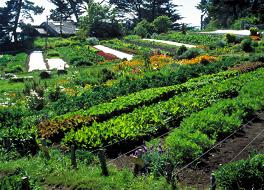
If we consult the dictionary of the Royal Spanish Academy (RAE), we will not find references to the concept of agroecosystem. This notion, however, is widely used in our language.
An agroecosystem is a ecosystem altered by man for the development of a Agropecuary exploitation. It is composed of abiotic and biotic elements they interact with each other.
Biotic elements or factors are those organisms living that are in full interaction, such as animals and plants; These interactions are also part of this concept and are object of study of ecology. One of the most important parameters to take into account is the place where they occur: they must all share the same ecosystem.
The relationships that living beings establish, understood as a biotic factor, condition our existence. In the case of agroecosystems, since they are based on the exploitation unnatural of a terrain, the repercussion not only reaches our circle but that of other living beings, thus how cigarette smoke affects second-hand smokers. Broadly speaking, we can distinguish between the following types of biotic elements: individual, population, community, producers, consumers and decomposers.
On the other hand, abiotic elements or factors are those that give the ecosystem its physicochemical characteristics, among which is light, humidity and temperature. It goes without saying that its importance for the development of life and Balance ecology is considerable; For example, the distribution of living beings throughout the planet depends on them, as well as their adaptation to each ecosystem, which is why any action by human beings that affects them also has consequences on biotic factors.
Agroecosystems aim to achieve a certain stability (through the management of environmental conditions) and to be sustainable or sustainable (so that exploitation can continue to develop over time). weather without depleting resources).
Most ecosystems have been transformed into agroecosystems since, for their development, the human being it usually modifies nature with the intention of favoring the exploitation of resources and obtaining food. Said changes alter ecological processes, affecting from the characteristics of the plants to the behavior of the animals.
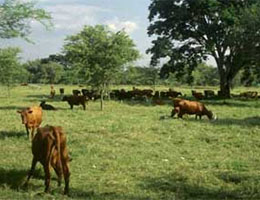
As can be seen, the Land it is not prepared for the degree of exploitation to which humans subject it. One of the reasons is the overpopulation of our species, which entails the need for a colossal volume of agricultural production compared to what there would be if we knew how to limit our birth rate, as all other species do.
In agroecosystems there is also an alteration of energy flows. It is common for men to provide sources of Energy to the ecosystem so that it can subsist.
The development of agroecosystems often points against the biological Diversity. Suppose that, due to the profitability offered by the crop, a region it turns to soybean production. In this way, rural producers begin to change the characteristics of the land to limit themselves to the cultivation of this plant. Over the years, the agroecosystem created will be very different from the natural ecosystem, with a predominance of soybeans to the detriment of other species that previously grew in the place.
On the other hand, alterations mentioned above that humans cause in the field and, by default, in the climate, they also negatively affect the rest of the animal species. Expanding or reducing artificially and forcibly the growth of a certain plant brings many changes for those who did not want or expect such changes, that is, for everyone except for man.
Leave a Reply