
causal agent
A agent It is that or that which has the ability to act or produce something. Causal, on the other hand, is something linked to a cause (a reason, a motivation or a rationale).
It is called causal agent the factor that is found in the environment and that, due to its characteristics, can generate a disorder from Health yet Guest. These agents are causal since they are the reason, direct or indirect, for the development of a disease.
It should be remembered that, in the field of biology, a host is an organism that, on its surface or inside, houses another with whom it maintains some kind of link. A parasite, for example, lodges in its Guest.
The causal agents, in this framework, can be biological agents, chemical agents, mechanical agents or physical agents and can cause a disease in the organism that hosts them. These agents generate alterations in the functional aspects, injuries and other inconveniences or damages.
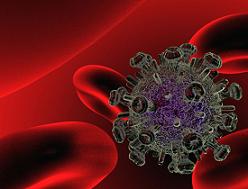
The biological agents They are also known by the name of bioagents and are organisms, such as a virus, a fungus, a parasite or a bacterium, or any material biological, such as a toxin, capable of producing health disorders in human beings, each with different, well-defined consequences.
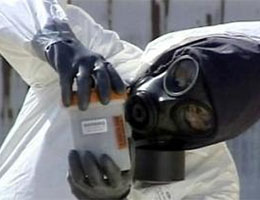
It is worth mentioning that in the context of calls biological wars the human being can use biological agents to create very harmful weapons, something that is also found as a fundamental element of the bioterrorism. In our planet we can find more than 1200 classes of biological agents.
The chemical agents, for their part, should not be confused with the previous ones, since they are all compounds Chemicals that are used in a work activity, that have been discharged into nature or distributed through commerce, either in their natural state or having undergone some type of industrial process.
While all causal agents cause certain risks In common, such as diseases, chemicals are distinguished by including explosions and fires on this list, among others. In the workplace, we can differentiate three fundamental situations in which chemical agents can harm people's health:
* constant or very frequent exposure: for example, in a work environment where there is normally steam from some toxic compound;
* accidental exposure: this can occur through the escape of a toxic gas outside the safe area, or the spillage of certain corrosive liquids, among other cases;
* without exposure: an explosion or a fire as a product of a causal agent are clear examples.
The physical agents, for their part, they are very common in the workplace, regardless of the field. Is about manifestations of energy capable of harming workers, and this includes noise, vibrations, extreme temperatures, and radiation. Spending several hours a day in an office where the air conditioning generates too low a temperature, or in an environment where noises are constant and at intensities above the norms can lead to a large number of diseases of varying severity.
The HIV, known by the acronym HIV, is the causal agent of AIDS (the Acquired immunodeficiency syndrome). When this virus is lodged in a human being, it can trigger the aforementioned syndrome. This causative agent is transmitted between people sexually, through breastfeeding or through contact with infected blood (by sharing a syringe, for example).
There are various social mechanisms for the control of causal agents. In the case of HIV, we work on the prevention of contagion (promoting the use of condoms in sexual relations, the use of disposable needles, etc.) and on the supply of antiretroviral drugs for the treatment of AIDS.
Leave a Reply