
almanac
The closest etymological antecedent of almanac is the word from Hispanic Arabic almanáẖ, which can be translated as "calendar". This term, in turn, derives from classical Arabic munāẖ, which refers to a "Caravan stop". This is linked to the custom of some ancient peoples to compare the positions of the stars with the location of the camels that were en route.
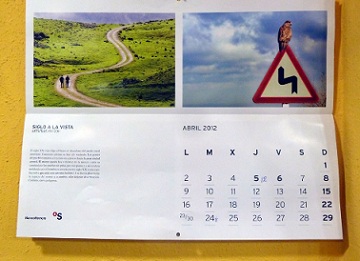
It can be said that an almanac is a record which includes the all the days of the year, organized according to weeks and the months, with various data and information of interest associated with each date.
Usually in an almanac there are questions related to the astronomy (like the different moon phases) already festivities (holidays or public holidays, celebrations of a religious nature). In many cases, the almanac has blank spaces so that you can write to them, which also works as a schedule.
It is important to mention that almanac can be used as a synonym for calendar. The Royal Spanish Academy (RAE), in this framework, defines the calendar as a system that allows to represent the passage of time, detailing the days in higher groupings (years, months, weeks). In addition, the sheets that graphically depict said system are called a calendar.
The notion of almanac, on the other hand, is also used to refer to a annual publication what collects news and data of different kinds. Typically, these almanacs specialize in a particular topic or sector: sports almanac, agricultural almanac, etc.
Leave a Reply