
incentive
Entering the term incentive means starting by knowing what its etymological origin is. In this case, we can establish that it is a word of Latin origin as it derives from "allicientis". Likewise, we can determine that it is the result of the sum of three clearly delimited components such as these:
-The prefix “ad-”, which can be translated as “towards”.
-The verb "lacere", which means "cajole" or "attract".
-The “-nt” component, which is used to indicate the agent.
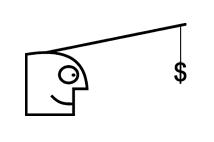
A incentive it's a stimulus or one incitement. The concept, which comes from the Latin word allicĭens, is used with reference to what attracts or tempts. For example: "The presence of Lionel Messi in the squad was one more incentive for me to decide to play for this club", "That the office is so close to my house is an incentive for me", "The historical attractions of the city are an incentive to choose it as a tourist destination".
An incentive is generally considered to be a incentive to make a decision or to carry out some action. Suppose that a man is analyzing the proposals of different banks to choose in which entity to open an account. This person studies the offers of various institutions until he makes the decision: for the subject, that a bank has offered him to enter a free points and rewards program it was an incentive when deciding.
The members of a marriage, on the other hand, debate about the place they will choose for their next holidays. After several hours of chatting, they decide together that they will travel to Rio de Janeiro. The combination of beaches and nightlife offered by the Brazilian city was an incentive for the couple.
As can be seen, it is possible to find incentives at various times in everyday life. The participation of an actor in a certain film may be an incentive to see the film, while the assistance from a friend A party can act as the incentive to attend the event. The possibility of receiving a money additional, on the other hand, is usually an incentive to work overtime (overtime).
For all the above we can determine that synonyms of incentive are "stimulus", "incentive" or "attractive", among others. On the contrary, antonyms of that word would be, for example, “impediment”.
Within the field of literature, on more than one occasion the term we are addressing has been used. Thus, for example, we have known statements from different writers who, for example, affirm that writing is their incentive to get up every morning or simply to have a great time. In this way, the authors Inma Chacón and Jon Juaristi think it respectively, since they have expressed it in different interviews they have granted.
In the field of psychology we come across the fact that the professionals who treat patients with depression are trying to make the latter begin to find the incentives that life has in order to begin to overcome the moment they are living. And those can be from raising and educating their children to falling in love to finding the job they like or enjoying family and friends who love them ...
Leave a Reply