
random
The adjective random comes from the Latin word random: The concept allows qualifying what is linked to the lucky and that it is unforeseen. For example: "We have no way of predicting who will win as the result is random", "This is a random video conferencing system: you never know who you will communicate with", "The federation announced that anti-doping tests will be random".
The random is something that can't be predicted since the random. Therefore, it is not possible to foresee its Outcome before it happens. This class of phenomena are studied from the probability to find out how often a certain result can be obtained, whenever possible.
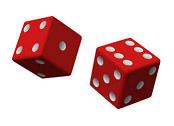
The randomness (the random condition) is the essence of gambling. When a person throws a dice, you have no way of knowing what number will come up: the result of the action is random. However, the probability indicates that each number has a one in six chance of rolling since the die has six numbers. In other words, there is a probability that the number will come up 1 out of six possible (the rest of the possibilities are the numbers two, 3, 4, 5 Y 6).
The result of the roulette it is also random. A man has no way of knowing where the ball will land before play, so he has no certainty about his bet. There are, however, studies and analyzes that can be carried out to try to anticipate the result, especially when it comes to manual roulette.
It is important to mention that the term random It is not very common in everyday speech, but instead uses "random", which can be taken as one of its synonyms, together with "fortuitous, casual" or "uncertain". In fact, in the definition of the Dictionary of the RAE, we see that random is something that belongs to the game of random or that it depends on the same chance, such as being a "chance."
For its part, the word random it is reserved above all for very specific areas, such as computer programming, where the concept itself is constantly used for the creation of a wide range of programs. While the growth Software is a relatively structured process that seeks previously established results, many times it is necessary to resort to chance to solve certain problems.
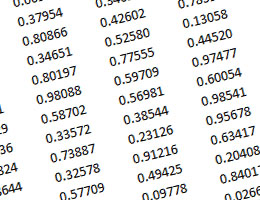
This happens especially in the video game industry, where certain elements must be placed in always different positions, so that they surprise the player. Since obtaining values Random is somewhat demanding for processors, it is recommended to create a list during loading and then take the numbers from there whenever they are needed.
To understand this, let's think of a very simple game in which we must control a ship with which to shoot a series of enemies that appear from the top of the screen and advance towards us. If we use random values to assign them a position, each game will be different; otherwise, the person will have the opportunity to learn from memory the design of each level and over time the challenge will decrease.
It is known by the name of random contract to a kind of bilateral legal act in which it is agreed that one of the benefits due depends on what takes place in the future, without this becoming a condition that may cancel the agreement, but is considered a contingency of loss or gain. This type of contract is also of type onerous, that is, both parties receive economic benefits and must meet certain obligations.
Leave a Reply