
additive
Additive is a term that can be used as adjective or as noun. In the first case, qualify what has or can be added or incorporated into something else.
In the field of mathematics, the additive adjective refers to the term that, in a polynomial, is preceded by the sign + (more). According to the traditional principles of this science, it is spoken of additive function to refer to the one that preserves the operation of addition, that is, the addition.
This can be seen in the following example: f (x + y) = f (x) + f (y); here we note that both for x as for Y the sum. It should be noted that in this case we are only talking about the values for which this function has been defined, that is, for all x and Y that are within your domain.
In this way, we can ensure that all transformations linear are additive, since this is one of the requirements of this concept, which can be defined as any application in which its vector spaces of the domain and codomain also meet the following property: T (ku) = kT (u), where or is a vector and k is a scalar.
On the other hand, if the elements of the domain are real numbers (set in which both negative, zero and positive numbers are found as well as irrational, those that cannot be expressed), then the additive function corresponds to that of Cauchy. It is known as Cauchy's functional equation is, in effect, f (x + y) = f (x) + f (y), as shown above that of additive function; Although it is one of the easiest to represent, in the set of real numbers it is very difficult to solve.
If we focus on the chemistry, the notion of additive applied to a property or a quantity refers to the fact that, in a mixture, it is shown as the sum of the values with which it appears in the various components.
From its use as an adjective, additive can also be used as noun. In this case, it is the substance that is added to another to improve it or to give it properties that it does not have.
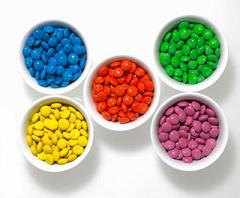
The Food Additives are those that are added to food to facilitate its conservation, prevent chemical changes or alter its taste, color or aroma. The flavorings, the colorants, the flavorings and the preservatives are some of the most common additives.

An example of a food additive is carminic acid, which is extracted from insects such as Dactylopius coccus (the Woodlouse). This substance serves as a coloring and is used in the production of ice cream, yogurt and jam, among others. products. By adding carminic acid to these foods, a reddish color is achieved that is very attractive to the eye.
Despite the great popularity of additives in the food industry, it is very important to note that many of them represent a great danger to our health; after all, these are substances that we do not normally use to prepare homemade food, with which we could say that they are not strictly necessary, but rather have specific, often aesthetic functions.
One of the most dangerous additives is aspartame, also known by the name of Equal or NutraSweet, which is usually part of diet foods. There is diverse evidence of its carcinogenic action, and it considerably exceeds all other additives in the industry in number of reactions adverse by consumers.
To the fuels additives can also be added to improve their properties. The ethanolTo cite one case, it optimizes gasoline combustion.
Leave a Reply