
embers
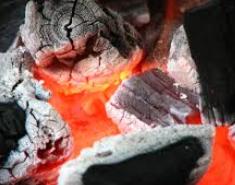
Ember is he Name who receives a piece of solid material which, when it comes into contact with fire, becomes incandescent, albeit without flame. That is why it is known as embers to remnants of the embers.
The etymology of this word does not seem to lead us down a well-defined path: while some scholars of the language point out that its origin is found in the voice ascus, which in Gothic means «ash«, And which came to German as asche, others claim that it arose in the Arabic language.
In the Prehistory, embers were used to light a bonfire. With the development of lighters, matches (matches) and lighters, the use of embers was greatly reduced.
Beyond this literal meaning, the idea embers or embers appears in various expressions of colloquial language. In classical literature and in some dictionaries the use of this term is shown as an exclamation to reflect a surprise or a pain that comes on suddenly. This meaning derives from how unfortunate it is to take a hot ember without knowing it.
While this use has already been forgotten, there are many other expressions that have taken its place, and that will also one day rest on the pages of today's books. East phenomenon The language allows us to learn many things about the different times, since they lead us to think about the characteristics of everyday life; For example, since heating and cooking are electric today in most developed cities, many people wouldn't even know how to define the term ember.
The phrase be "On fire" or "on tenterhooks", on the other hand, refers to remain expectant, intrigued, or restless for something: "Ramiro has not called me yet and I am on edge to know how it went", "This issue has my father on edge", "Marta is on edge for the restructuring of the company".
This phrase is used in everyday speech in certain countries, and its meaning is easy to understand if we focus on the literal definition of embers: If a person is standing on a large number of pieces of incandescent material, it is logical that they feel restless and that they cannot relax, since they will feel a hot excessive and you will fear severe burns if you cannot get out of there in time.

When a person make a action by way of prudent and unhurried, People say that "Tread on embers": "I suggest you step on embers before making a decision about it", "I am going to tread on embers to avoid being wrong: I cannot fail".
Regarding the phrase step on embers, something similar to that expressed above occurs to explain be in or on tenterhooks. To move on a very hot ground, full of incandescent material, one of the best options is to do it with prudence and testing at each step the best way to minimize the damage.
"Arrimar"Or"pull upI know the ember to his sardine "Finally, it is a phrase that is used symbolically when an individual pretends take advantage of another or a situation to get a benefit: "Juan brought the ember to his sardine when Mercedes said that she would take a leave of absence".
To understand the meaning of this phrase, we must imagine a group of people roasting sardines, and one of them bringing the embers to his portion so that it cooks in the carelessness of the other diners. It is an action that seeks to take advantage of an occasion in a selfish and inconsiderate.
Leave a Reply