
Mescaline: the 10 effects (physical and psychological) of this hallucinogenic drug
By definition, a drug is any substance of animal, vegetable or synthetic origin that, after being introduced into our body through different routes and due to its chemical properties, has the ability to alter the physiology of our central nervous system. And each drug acts differently on our neurology.
Feeling of euphoria like heroin, depression of the nervous system like alcohol, increased energy like caffeine, reduced pain sensation like morphine, sensation of pleasure like Popper and, of course, hallucinations. And this is where we have to stop.
Hallucinogenic drugs are psychoactive substances that, after being inoculated into our body, alter the physiology of the central nervous system in such a way that our perception of reality changes and our thoughts become strange. I mean, we hallucinate. And although the best known are LSD and psilocybin (which comes from mushrooms or hallucinogenic mushrooms), there is one that, from a scientific point of view, is amazing.
We are talking about mescaline, a drug made from peyote (a type of spineless cactus endemic to Mexico) and that has traditionally been used by American tribes as part of mystical rituals. In today's article, then, we will see its chemical properties and, above all, its effects on the body. It's time to learn everything you always wanted to know (but never dared to ask) about mescaline.
What is mescaline?
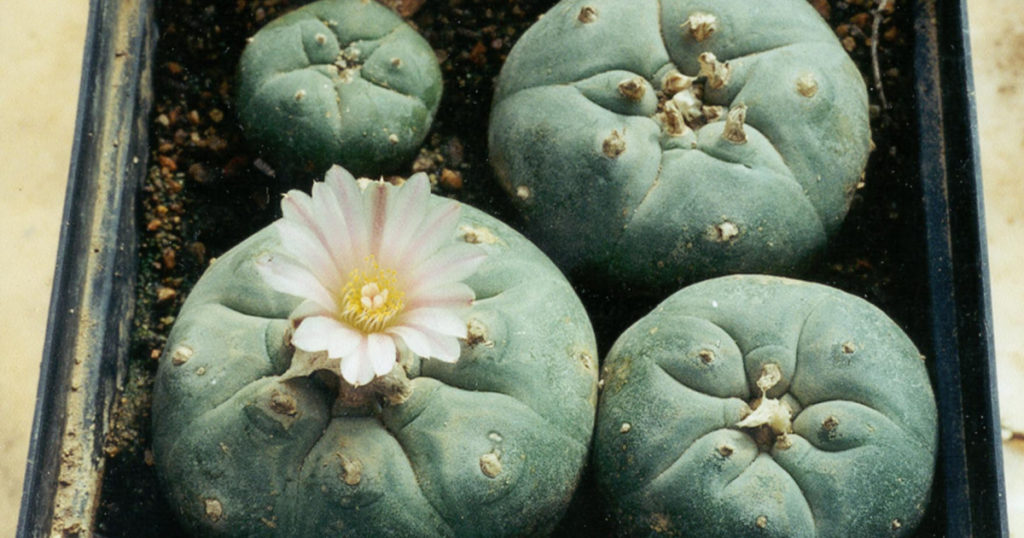
Mescaline is a hallucinogenic drug obtained from peyote, a small species of spineless cactus with a scientific name Lophophora williamsii, endemic to Mexico. Peyote contains different phenylethylamine alkaloids, including mescaline, which is the main substance responsible for the psychoactive effects of this plant.
Also found in the cactus species Trichocereus pachanoi (better known as San Pedro cactus), mescaline or 3,4,5-trimethoxyphenethylamine is a psychoactive substance that has been used for thousands of years as part of mystical rituals or for spiritual purposes in many American tribes, especially in Mexico .
But it was not until 1897 that the German pharmacologist Arthur Heffler managed to isolate the active principle of peyote for the first time., which was given the name "mescaline" since this alkaloid had been extracted from the dried peyote buttons known as "mescal buttons." As early as 1919, it was artificially synthesized in a Viene laboratory, thus being the first hallucinogenic alkaloid to be synthesized.
At the chemical level, mescaline is the main representative of phenylethylamine-type hallucinogens (the other large group are tryptamines), consisting of three methoxide groups attached to a benzene ring in positions 3, 4 and 5, in addition to an amino group attached to an aliphatic side chain.
Usually, mescaline is in the form of saltIt can be consumed through peyote (in dried peyotes, the mescaline content is, on average, 2%), in the form of resin, in capsules and even in tea. It takes between 200 and 600 mg of pure mescaline to feel its effects, but it must be taken into account that its taste is unpleasant, so it is generally consumed in capsules.
Be that as it may, although it is true that culturally it is usually consumed for its psychotropic effects, the truth is that it has possible medical applications in fields such as psychology and psychiatry (especially in the study of the molecular bases of schizophrenia), for what your study is gaining importance on a clinical level.
At the neurological level, when mescaline is consumed, it acts as a serotonergic receptor antagonist, joining them and altering their normal function. This, together with the fact that it prevents glutamate and sodium from oxidizing and its action at the level of the hypothalamus, causes all the psychological (and also physical) effects that we will analyze below to be generated.
What are the psychological and physical effects of mescaline?
Mescaline is a difficult substance to isolate and synthesize, which is why, even for recreational purposes, it is expensive. Hence, many times, what reaches the consumer is a product adulterated with LSD or that is directly LSD. Anyway, we are going to focus on the psychological and physical effects of pure mescaline.
Its legality depends on the country, but it must be taken into account that, regardless of whether its consumption is legal or illegal, mescaline is totally contraindicated in children, pregnant women, lactating women, people with psychological disorders and, obviously, when driving or operating heavy machinery.
In parallel, it is important to remember that you have to consume it with the respect it deserves, in the company of the right people, without mixing with other substances and always doing it in a safe and pleasant environment (it is not recommended to consume it at parties). That said, we see what mescaline causes in our body.
1. Visual and sound disturbances
One of the main neurological effects of mescaline is the visual and sound disturbances it produces. That is, its consumption generates hallucinations of both images and sounds, which is what really makes "travel". These alterations depend on each person.
2. Feeling of euphoria
Generally, one of the main effects of mescaline consumption is the feeling of euphoria and happiness. Anyway, there are times when this euphoria is so excessive that it can turn into anxiety, at which point we have a “bad trip”.
3. Deep state of introspection
Often times, mescaline causes, on a psychological level, an increase in concentration and, above all, entering a deep state of introspection that can allow us access to places in our mind that we did not even know or memories that we had forgotten.
4. Alterations in skin sensations
Hallucinations are not limited only to the classic ones linked to images and sounds that escape the normal perception of reality. The sense of touch is also altered. This explains that, many times, hallucinations are also associated with strange sensations on the skin and feeling that we are touching things that, in reality, are not there.
5. Hallucinations in the perception of space and time
At the level of hallucinations, mescaline also causes alterations in the perception of both space and time that, on occasions, can be serious. The passage of time becomes confusing and the environment around us is distorted. Although this is part of the experience, it is important that we consume this drug in a safe environment and with the company of people who have not taken it.
6. Tachycardia
On a physical level, one of the main effects of mescaline is that it increases the heart rate. In this context, mescaline causes tachycardia, that is, an acceleration of the rhythm of the heartbeat with a heart rate greater than 100 beats per minute.
7. Changes in mood
Consuming mescaline too causes emotional turbulence. This drug causes our emotions and feelings to fluctuate rapidly and with great intensity, something that can be part of the journey if the emotions are positive, but also something negative if these emotions tend to anxiety, fear and stress.
8. Sensation of dreaming
With the consumption of mescaline, the hallucinations generated and the distortion of reality make us feel that, instead of being awake, we find ourselves dreaming. The stimulated psychotropic state and the associated physical effects make everything seem like a dream.
9. Increased libido
One of the most common effects after mescaline consumption is an increase in libido, that is, an increase in the desire to practice sexual intercourse. This stimulation of sexual desire is what made, since its use in the American tribes, mescaline is considered a powerful aphrodisiac.
10. Improved creativity
Fortunately or unfortunately, many of the most creative artistic manifestations have been carried out under the influence of hallucinogenic drugs. And it is that in the specific case of mescaline, This not only increases the musical and artistic sensitivity, but also stimulates the imagination and creativity of the person who consumes it.
What are the risks of mescaline consumption?
Like any hallucinogenic drug, mescaline has the risk of causing us what is popularly known as a “bad trip”. Thus, it is important to respect the dose of 200-600 mg of mescaline when we go to consume it. This does not assure us that there will be no side effects, but it does reduce the chances of colliding with the risks of this substance.
Mescaline, in certain people, can cause dizziness, anxiety, nausea, vomiting, headache, weakness, fatigue, paranoia, seizures, amnesia, suicidal thoughts, excessive sweating, terrors, confusion, injuries (from hallucinations), terrifying hallucinations , dilated pupils, loss of appetite, diarrhea, increased body temperature, lack of coordination, blurred vision, psychotic episodes ...
Even so, there are no known deaths directly related to its use. Thus, within the possibility of suffering this "bad trip", mescaline is considered a substance, at least on a physical level, safe. And is that Although it can generate tolerance, it does not generate addiction or physical dependenceAlthough, as with all hallucinogenic drugs, there can be psychological dependence. From here, you have the freedom to decide.
Leave a Reply