
ewer

Ewer is a term that comes from late Latin aquamanile. The first meaning mentioned by the Royal Spanish Academy (RAE) in your dictionary refers to a pitcher that has peak and that is used for pouring water into a basin or basin for hand washing.
The RAE further notes that the concept of ewer can be used to refer specifically to the battery wave basin. A third meaning indicates that ewer is synonymous with basin: the furniture used to locate the basin that allows washing and that, on occasions, also provides space to place soap and other items of personal hygiene.
In ancient times the ewer was a widely used object.
Ewer Features
The first thing to note is that the ewer is a pitcher. This means that it is a vessel similar to a jug with a single handle. This vessel also has the particularity of having a peak: a protruding tip to facilitate the pouring of water.
The ewer is filled with Water used to wash hands. To avoid wetting the floor, the liquid is poured over a battery (a concave structure and of a certain depth) or on a basin or basin (a large diameter container).
To wash your hands with the ewer, therefore, the jug must be filled with water. Then the person You have to stand next to the sink or basin and pour the liquid out while you scrub your hands. The task is simplified if another individual is in charge of holding the ewer and pouring the contents.
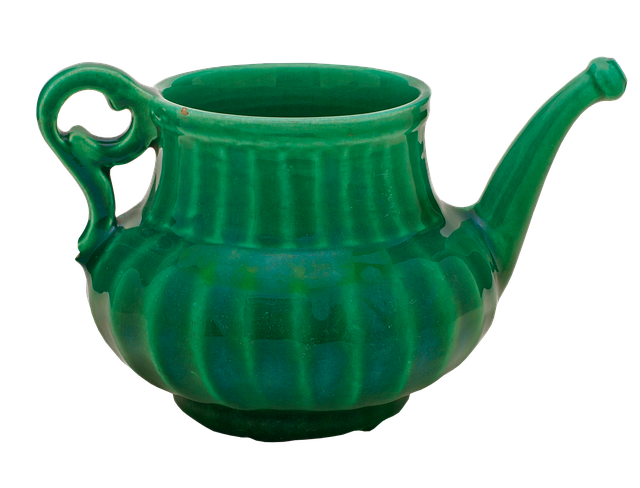
The ewer is a vessel similar to a jug.
Its use at the table
It is interesting to mention that, long ago, the ewer was a very important item in the tables more elegant. At that time, cutlery was not used, but food it was taken from the plate with the hand.
The ewer, in this frame, was necessary to sanitize hands when eating. In this case, the water was poured over a bat. As the use of cutlery became more important, the ewer lost its preponderance.
Historical and symbolic relevance of the ewer
The use of the ewer has not been common in most homes for a long time. Today hand washing is usually done by opening the faucet or bobbin and letting the water fall into the handwash, lavatory or sink. At mealtime, meanwhile, the fork and knife are used, so that the hands do not get too dirty.
However, in ancient times it was a widely used object. Even depending on the design and materials, the ewer could stand out in the crockery as a luxury item.
It should be noted the existence of zoomorphic ewer. In several museums Pieces of this type are preserved that stand out for their historical relevance.
It cannot be omitted from mentioning that the ewer is also present in the representation of virtues such as the patience, the prudence and the temperance. In this way the vessel appears in the different iconographies.
Leave a Reply