
hole
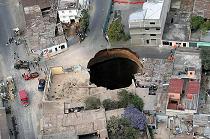
A hole is a crack round or similar in shape that can be found in different things. It's about a orifice or of a drilling that implies a rupture, or a depression of the continuity of a surface. For example: "I can't wear these pants again: I just realized there is a hole in the crotch", "To rescue the trapped child, the firefighters had to make a hole in the wall", "The whole dining room got wet with the rain, surely there is a hole in the ceiling".
As can be seen from the definition, there are multiple types of holes. In a physical sense, a hole can occur in the clothing, in a building, in different kinds of infrastructure (like a road or a bridge), etc.
The concept It is also used to name the wells: "To access the minerals, the miners had to descend through a hole eight hundred meters deep", "Be careful: there is a big hole in the middle of the avenue", "The municipal authorities have promised to cover the hole so that no one runs the risk of falling into it".
The notion of hole is also used symbolically to name a failure, a vulnerability or one lack: "Hackers exploited a security hole in the Pentagon system and stole highly confidential information", "The audit revealed a million dollar hole in the company's accounts", "We have a hole in the defense that we can only solve by signing a quality defender".
The first example mentions the concept known as security hole, a vulnerability that affects a information system and that opens the doors to various types of breaches of your security. This can take place in many areas, although we usually associate it only with software; for example, it can occur in the hardware, in the group of people in charge of the system, in the means of communication used for its operation and in any of the procedures through which it is organized and administered.
Often the holes of safety they become public knowledge, and this can happen for several reasons; Usually, those who discover them make sure the whole world knows about it, with the intention of intimidating those who try to combat their actions.
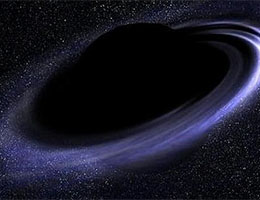
In the field of astronomy, is named black hole to a spatial zone that cannot be seen but that, according to the theory of relativity, has the capacity to absorb the Energy and matter that are in its gravitational field. This is because its mass concentration is very high, developing a gravitational field that absorbs even light.
In other words, we can say that, according to the knowledge of astronomy, there is no material particle capable of avoiding the action of the black hole. On the other hand, in the 1970s, the respected British scientist Stephen Hawking pointed out that black holes can also emit radiation, although it does not come from its interior but from its accretion disk, that is, from the structure of dust and gas that surrounds it and that feeds it while being attracted to it.
Although our language does not present substantial differences between spelling and phonetics, as it does with English, for example, it is common to find mistakes pronunciation of certain words, both among the youngest and in sectors of the population with a lower level of schooling. In the case of the term hole, it is not uncommon for people to omit the lyrics g, turning it into aujero; children, on the other hand, tend to say abujero. Needless to say, both variants are incorrect.
Leave a Reply