
hard water
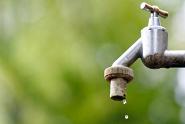
The Water It is a tasteless, odorless, and colorless substance whose molecules are made up of two hydrogen atoms and one oxygen atom. It is an essential element for the development of life. Something LastedOn the other hand, it is not soft, exerts resistance or is rough.
It is known as hard water to one that hinders the development of foam when in contact with soap, due to the fact that it presents a high amount of magnesium and calcium bicarbonates and carbonates. To calculate the hardness of water, the concentrations of magnesium and calcium that are present in each liter of water are usually added.
The opposite of hard water is soft water: the liquid that has a very low amount of mineral salts. When there is no mineral in the water (that is, when it is formed only by hydrogen and oxygen), we speak of distilled water.
In addition to magnesium and calcium, the hardness of the water is determined according to the amount of zinc, manganese or iron, among other cations (A cation is an ion whose electric charge is positive, which is why it follows that it has suffered a loss of electrons; its state of oxidation is positive). According to World Health Organization (WHO), this value must be expressed in milligrams of substances equivalent to carbonate per liter of water; when it does not reach 60, then we are faced with soft water.
Water hardness can be permanent or temporary. In the case of permanent hard water, no matter how much it is boiled, the chlorides and sulfates of magnesium and calcium are conserved since, after reaching a certain temperature, its solubility begins to decrease.
The temporary hard waterOn the other hand, it can lose its hardness when calcium hydroxide is added or when it is boiled. This is because its carbonates can dissolve and therefore be removed.
It is important to know that hard water generates various problems. When hard water is used in clothes irons, water heaters, washing machines or boilers, it is common for carbonates to become embedded in the deposits and ducts. In this way, the appliances can become clogged and stop working properly.
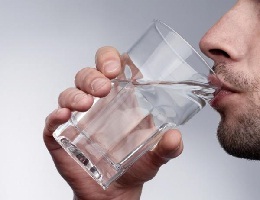
Regarding the impact that hard water can have on our Health, the debate has not yet closed, since to confront its detractors there are those who claim that its consumption is key to satisfy the need that our body has for magnesium and calcium. Some researchers point out that both positions are inconsistent and inaccurate, so it is important to approach the issue with an open mind and focus on the evidence before making a final decision.
The hardness of water directly affects its organoleptic properties, that is, in all those parameters that we can use to describe their features physical according to the perception that our senses have of them, among which are their texture, smell, taste, temperature and color.
The WHO ensures that water whose hardness exceeds 200 mg / l carries the risk of scale formation in tanks and pipes, while if it is below the 100 mg / l long-term corrosion can occur.
Leaving aside machines and pipes, there are experts who assure that in humans it can lead to the appearance of kidney stones, although none of the studies carried out specifically on this subject since 1984 have yielded scientific evidence that supports the risks that many attribute to hard water. The general trend, however, is to avoid its consumption in children and people with urinary problems.
Leave a Reply