
Water
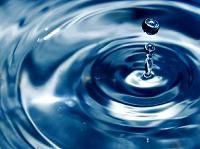
From Latin aqua, the Water is a substance whose molecules are composed of one oxygen atom and two hydrogen atoms. It is a liquid toilet (without smell), tasteless (tasteless) e colorless (without color), although it can also be found in a solid state (when it is known as ice) or in a gaseous state (steam).
Water is the component that appears most abundantly on the earth's surface (it covers about 71% of the crust of the Land). It forms the oceans, rivers and rains, as well as being a constituent part of all living organisms. The circulation of water in the ecosystems It is produced through a cycle that consists of evaporation or transpiration, precipitation and movement towards the sea.
It is known as sweet water to water that contains a minimal amount of dissolved salts (unlike seawater, which is salty). Through a purification process, the human being manages to convert fresh water into drinking water, that is to say, suitable for consumption thanks to the balanced value of its minerals. It is important to note that the shortage of drinking water in many regions of the planet causes more than 5 million deaths a year.
The mineral water, as its name suggests, contains minerals and other dissolved substances, so that a value is added to it therapeutic or the taste is altered. This type of water is the one that is marketed packaged throughout the world for human consumption.
Shortage
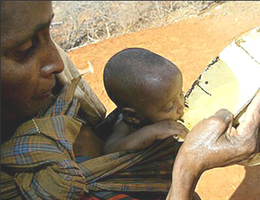
Water scarcity is a problem that occurs in all parts of the planet. Around 20% of the world's population lives in areas where there is not enough water, and another 10% is close to this situation. On the other hand, 25% must face the lack of resources on the part of their country to carry out the transport of water from aquifers and rivers.
For many, the water shortage has become one of the most urgent issues to be resolved in the 21st century, in part because of the excessive consumption that took place during the previous one hundred years, the rate of which doubled the birth rate. Although it is not correct to say that the entire Earth suffers from a lack of water, the number of areas that lacks this resource vital grows worryingly.
As is known, the action of our species is, to a large extent, responsible for this phenomenon: the amount of drinking water present in the entire world is enough to supply us all; However, given the irregularity with which it is distributed and the enormous waste by a large percentage of the population, its management becomes unsustainable.
In general, hydrology uses the relationship between water and population to measure scarcity, which exists when the annual supply of water to a region decreases by 1000 cubic meters per person; is spoken water stress, on the other hand, when the descent is 1700 cubic meters. Absolute scarcity occurs when each individual has access to less than 500 cubic meters per year.
In other words, water scarcity occurs when the demand for that resource cannot be met, either due to its quantity or its quality. It is important to remember that it is not only used for drinking, but that humans have given it other uses, which also enter the equation.
For this reason, scarcity is a relative concept, a phenomenon that may arise from an excessive demand in an environment that could well supply the real needs, or from the lack of the minimum necessary for the lives of its users.
Leave a Reply