
albedo
The first thing we are going to do in order to determine the meaning of the term albedo that concerns us now is to discover its etymological origin. In this case, we can say that it is a word that derives from Latin, specifically from "albedo", which can be translated as "whiteness".
In the field of physical, albedo is called the relationship between the diffused light energy by a surface through reflection and incident energy.
In other words, the albedo reveals what level of radiation reflects a surface compared to the total radiation it receives. Albedo is therefore indicated in percentage terms.
According to specialists, the planet Land have a middle albedo close to 38% regarding solar radiation. On light surfaces, the albedo is higher than on darker surfaces.
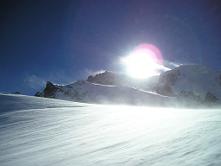
While the snow has an albedo of 86% (that is, it reflects 86% of the light it receives), deserts are located around the twenty-one%, the woods Arrive at 8% and the seas barely reach between 5% and the 10%. This means that a snow-covered surface reflects much more light than an ocean.
When the albedo is high, the temperature on the planet it tends to descend because the sun's radiation, for the most part, is not absorbed, but rather reflected. On the other hand, if the albedo is low, the planet heats up: the percentage of solar radiation absorbed by the surface is very high.
A curiosity about this effect that we are addressing occurs in the lands of Andalusia. Specifically, in them, since time immemorial, it is traditional for the facades of houses to be painted white. And that is because, in this way, the albedo is high, thus being able to reflect light and regulate heat, especially in summer times when temperatures are very high.
In other words, it is a way of ensuring that inside Andalusian homes you can enjoy a little more freshness than on the street.
Other uses of the notion of albedo are found in the botany (This is how a certain sector of the fruit mesocarp is called) and alchemy (Albedo is one of the stages of transmutation that allows a substance to be turned into gold).
Within the scope of gastronomy the term albedo is also used. In this case, when it is used it is to name the white and bitter part that certain citrus fruits have, such as oranges, lime or grapefruit. It is a part that, although as a general rule it is discarded, in recent times it has begun to be considered very useful for shaping all kinds of dishes, recipes and even drinks.
A good example of this can be found in a recipe by the well-known and internationally famous Catalan chef Ferrá Adriá. We are referring to espardeñas with albedo puree.
Leave a Reply