
chili pepper
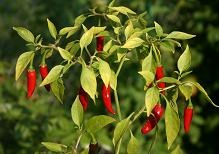
Confusions often arise when trying to name the fruit of the plants that belong to the genus Capsicum. According to the region, we can find references to chili pepper, the pepper, the chili or the bell pepper: in all cases, the idea refers to the same fruit.
In the specific case of the term chili pepper, comes from idiom taino, that spoke pre-Columbian settlers in the American continent. Specifically, it is established that it derives from the Taino "haxi".
Ají is a word that is used mainly in South America to name the berry of plants Capsicum.
The Humans began consuming chili peppers several millennia before Christ. When Europeans discovered this fruit in AmericaThey called it pepper because of its spicy flavor, which reminded them of pepper. Upon being brought to the European continent, the chili pepper soon became popular and began to form part of various gastronomic preparations.
There are numerous references to chili pepper for centuries. A good example of this is that in Cristóbal Colón's “Diario de on board”, who was later transcribed by Bartolomé de las Casas, there is already talk of this aforementioned product. Specifically, it seems that in the entry on January 15, 1493, it is said that chili is very abundant on the island of Española and that it is eaten a lot. Moreover, it is even clarified that it is so important that they add it to all meals.
There are different varieties of chili. The Capsicum annuum is known as Sweet pepper or as Bell pepper. The Capsicum baccatum is he crystal chili or Yellow pepper. Other widely used chili peppers are Capsicum chinense (chili pepper), the Capsicum pubescens (crazy or rocoto) and the Capsicum frutescens (paprica or tabasco).
There are many curiosities about chili that are worth knowing, highlighting in a special way the following:
-The Aztecs seem to have used it to deal with toothaches. And it was considered that it did a great job as an analgesic.
-If peppers have been eaten in many areas near the Tropics for years and years, it is because it is believed to help eliminate bacteria that those who lived there had to deal with.
-After Christopher Columbus brought chili pepper to Spain, Portugal and Asia also began to use it. And they still do it today.
-The different studies that have been carried out on chili have shown that it is a great source of antioxidants as well as minerals and vitamins.
-In addition, the intake of this product is considered to be helpful in reducing the risks of heart disease.
There are multiple recipes which are made with chili. On Peru, for example, a kind of chili pepper is called stew which is made with yellow chili. Among those stews, one of the most famous is the chicken chili which, as its name indicates, has chicken meat and broth, as well as chili and bread. The tuna chili and the egg chili are other dishes of Peruvian cuisine.
Leave a Reply