
agglomeration
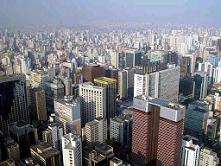
Agglomeration is the act and the Outcome from agglomerate: gather many elements, couple or glue different substances or fragments of something. The most common use of the term is within the framework of the notion of urban agglomeration.
An urban agglomeration is a space formed by the urban area belonging to a town and by the suburban areas that are in its surroundings. In this way, a region is generated that can cross various administrative divisions based on demographic and urban growth.
Typically, an urban agglomeration develops around a large city. Due to economic and social issues, new developments began to emerge in its vicinity, which often became satellite towns. Also the growth of the city beyond its limits causes the appearance of these urban agglomerations.
In Argentina, for example, Autonomous City of Buenos Aires (the Federal capital) and the call Greater Buenos Aires they form a large urban agglomeration with more than 15 million inhabitants. In this case, agglomeration includes Buenos aires city and districts belonging to the Buenos Aires province What Avellaneda, Florencio Varela, The slaughter, Quilmes, San Isidro Y Vicente Lopez, among others. The urban agglomeration of Buenos Aires It is the main economic pole of the country.
By observing an urban agglomeration, therefore, it is possible to distinguish between two elements: the city and the suburbs. These are the two main components of your structure, and each one has its own characteristics and even its own history, although at some point they become part of a whole.
The city of an urban agglomeration is also known by the name of Central core, and it is the pivot on which its entire structure is generated. Its density is high, and that is where it exists the largest number of sources of employment and activities belonging to the third sector.
For its part, the tertiary sector, also known as service sectorIt is a concept from the field of economics that refers to all activities linked to services that do not produce or transform material goods; In other words, it is possible to say that in this sector services are offered that seek to satisfy certain needs of the population, such as commerce, tourism, communications, entertainment, leisure, hospitality, education and health.
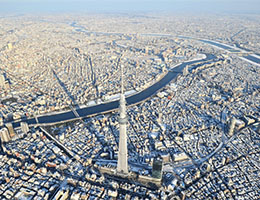
This nucleus is characterized by having most of the urban equipment and infrastructure services, as well as a more solid organization than the rest of the territories that surround it. It is from this point that usually the different transport routes emerge radially that serve to communicate the city with the other components, that is, the suburbs.
The suburbs of an urban agglomeration surround the city and are grouped along the transport routes, forming concentric circles. Among its characteristics stands out a lower population density than in the nucleus, which is usually discontinuous and merges progressively with the ambit subrural the further they are from the nucleus.
An agglomeration of people, on the other hand, it is a massive gathering of individuals: "The crowd of fans made it difficult to see the players", "I don't usually go to concerts of this magnitude because I'm afraid of crowds of people", "Given the impressive discounts in the store, the crowd of customers was not far from an apocalyptic painting".
From the meaning of agglomeration, it can also be spoken of agglomerate (the rock composed of solidified pieces of lava) and chipboard (created by joining chips with glue), among other concepts.
Leave a Reply