
allotropy
The notion of allotropy It is used in the field of chemistry to name the property that certain chemical elements of appear with different characteristics in terms of physics or with different molecular structures. A molecule that is composed of a single element and that has several structures is called allotrope. In its etymology we find that it is composed of the concepts others, spin around and a suffix indicating "quality."
It is important to note that allotropic properties take place in elements of equivalent composition but different aspects, if they are found in condition solid. In other words, the state of aggregation of matter must be the same for the properties to occur.
The diversity of properties is linked to the way the properties are arranged atoms in the space. This particularity means that the same chemical element can present several conformations. The match, for example, it may appear as white phosphorus or as red phosphorus. In a similar sense, the carbon, according to different factors, it is presented as Diamond or graphite.
Allotropia is also present in the oxygen. The O2 (ambient oxygen) that is in the atmosphere can be breathed by living beings and enables combustion. The O3 (ozone), on the other hand, it is toxic and absorbs ultraviolet radiation. As you can see, oxygen is a chemical element that has allotropy.
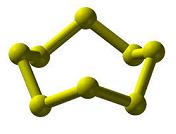
In the sulfur allotropy can also be noted. We can find structures As the plastic sulfur, the alpha sulfur, the monoclinic sulfur and the molten sulfur, among other allotropes of the same element.
It should be noted that, in the case of sulfur, it is different crystalline forms, with structural units that are packed differently. That is why there are experts who speak of polymorphism and not allotropy. To avoid potential confusion between both concepts, it is recommended to understand allotropy as several forms of the same element with different molecular units. In carbon and other elements, what changes are the chemical bonds that make up the atoms.
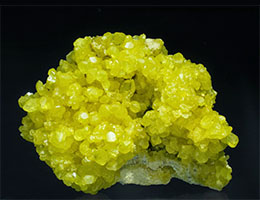
Continuing with the polymorphism, sulfur is capable of producing crystals monoclinics of a deep yellow hue (in this case its shape resembles, at each end, the blade of a chisel, a manual cutting tool used to shape or carve wood) or rhombic amber crystals (The shape of these crystals can be defined as that of a parallelepiped, a geometric body made up of six parallelograms, of which only those opposite each other are parallel and equal).
Although humans have known sulfur since ancient times, which take us back to prehistory, it was only at the end of the 20th century that they fully understood the allotropy that this element possesses. In nature, the most common of them is the octa-sulfur cycle, which if it does not reach a temperature 95 ° C forms crystals of relative thickness, while above it the resulting crystals are acicular (that is, they have a needle-like appearance or shape).
The first synthesis of an allotrope of sulfur, on the other hand, was carried out in the year 1891, with one having rings of a size different from eight. It was about hexosulfur cycle, the second of all the real allotropes of this element to be discovered.
The limits of ring measurements of the allotropes of sulfur that it has been possible to synthesize so far are 6 and 20, although science estimates that there are some with rings that lie above the latter value. Of all of them, the one that has shown the greatest stability, beyond the octa-sulfur cycle, is the dodecaulfur cycle (its size is 12).
Leave a Reply