
alkenes
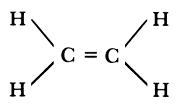
It is known as alkenes to the hydrocarbons unsaturated type that have molecules with at least one carbon-carbon double bond. These compounds are alkanes that, by losing a pair of hydrogen atoms, they start to have a double bond formed by two carbons.
It is important to mention that the notion of alkenes is not included in the dictionary of Royal Spanish Academy (RAE). On the other hand, the concept of alkanes does appear.
Alkenes used to be known as olefins, since the compounds of greater simplicity generate oils when establishing a reaction with a halogen. Alkenes, on the other hand, have different physical characteristics with respect to alkanes because the carbon double bond changes properties related to acidity and polarity, for example.
Through different chemical reactions, alkenes are transformed into different organic compounds. Said reactions they can be pericyclic mechanisms, the action of free radicals or electrophilic additions. Let's look at these concepts in more detail:
* chemical reaction: It's about a phenomenon which is also known as chemical change and that consists of a thermodynamic process (certain magnitudes go through an evolution) in which one or more substances undergo a transformation that changes their bonds and their molecular structure to give rise to new substances, which are called products. Iron oxide, for example, is formed through a chemical reaction between iron and oxygen in the air;
* pericyclic reaction: it is a concept belonging to organic chemistry, and that serves to define a reaction in which a cyclic geometric in the state of transition. It is possible to classify these types of reactions as electrocyclic, sigmatropic, cycloaddition, chelotropic or group transfer. It is known that they are usually in chemical equilibrium, that is, there are no net changes in concentrations and activities over time, although a shift in equilibrium in one direction may occur if the energy content of the product is considerably reduced;
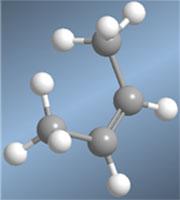
* free radical: this chemical species, whose action can collaborate with the transformation of alkenes into other compounds, can be organic or inorganic and today it is simply called radical. It is characterized by having a minimum of one unpaired electron (also called unpaired electron, is the one in which there is no compensation of its spin by another electron that has it opposite). The formation of the radical takes place when a molecule undergoes a homolytic breakdown in the middle of a chemical reaction and is usually very unstable, which is why it lives only a few milliseconds but is considerably reagent;
* electrophilic addition: a reaction of this type is characterized by the loss of a pi bond that a chemical compound undergoes, thanks to which two new sigma bonds are formed. It is framed in the organic chemistry, more precisely in the reaction mechanisms. The substrates that usually appear in an electrophilic addition have carbon-carbon double or triple bonds. Generally, this type of reaction is biomolecular or second order.
Among the alkenes, we can mention the ethylene, which is located in the plants. When water is added to ethylene, it is possible to obtain ethanol. On the other hand, through a metallic catalyst, a reaction between ethylene and molecular hydrogen can be carried out to achieve ethane.
The isobutylene is another alkene that is used in the field of industry. With a branched structure, isobutylene is a colorless gas that is flammable when under normal temperature and pressure conditions.
Leave a Reply