
tangential acceleration
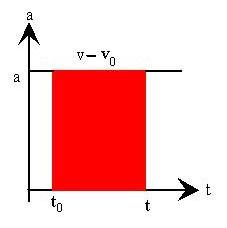
The word acceleration It refers to the accelerating action and effect. This verb, on the other hand, supposes the increase of the speed. That is why it is important to differentiate between velocity (showing the change in position of a body with respect to weather) and acceleration (which indicates how the velocity changes).
On the other hand, acceleration is a vector magnitude that allows expressing the increase in speed in a unit of time. The International System establishes that said Unit is the meter per second every second (m / s²).
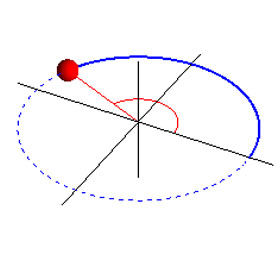
To define and analyze the concept of tangential acceleration, it is first necessary to clarify that it is a term related to the circular movement; this one describes a trajectory circularly around an axis on which it rotates maintaining a constant radius. When the speed of this movement is also maintained over time, what is known as Uniform circular motion (known as MCU); This situation is considered a special case, since there is no variation in any of its components, and it is more typical of theory than of practice.
When a circular movement is carried out, the body that is moving has a velocity angular, since it constantly rotates with a certain inclination. The elements that make up its definition are the angle of rotation for each unit of time and the letter of the Greek alphabet used to designate it is ω (omega); according to the International System, this is expressed as radians per second, or rad / s. It should be mentioned that although it is indicated to describe the rotational movement of rigid solid bodies, it can also be used for particles, especially if they move in a closed path, such as a circle or an ellipse.
On the other hand, the tangential velocity is that presented by the body at a certain point in time, taking into account your direction and its sense, as well as the radius through which it is traveling in a particular fraction of its trajectory. To measure it, the unit of space is taken into account by that of time, such as meters per second or kilometers per hour. Although to calculate it, it is possible to take the angular velocity as a reference, it is necessary to understand that it can be constant, while the tangential one can vary at each step, given the alterations in the route.
Refering to tangential acceleration, it is about the magnitude that links the variation of speed with time. For example, in the case of a car, tangential acceleration depends on how the driver steps on the accelerator. Thus, the tangential acceleration is the one that increases or decreases the speed with which displace the vehicle.
Tangential acceleration differs from normal acceleration, which supposes another perpendicular component into which the vector acceleration. Normal acceleration is that which reflects the change that occurs in the direction of velocity with time.
Returning to the example of the car, normal acceleration appears when the driver decides to turn the steering wheel and steer the vehicle. This leads us to recognize that an acceleration can have different directions, and that these can in turn point in the same direction as the speed (when the car is moving) or in the opposite direction (when the car is braking).
The term tangent indicates that the direction of the acceleration is the same as that of the tangential velocity, although its direction may be opposite. Normal acceleration, on the other hand, has the same direction as the radio of the circumference, so it is perpendicular to the route drawn.
Leave a Reply