
steel
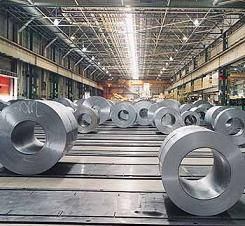
The etymology of the word steel takes us to latin aciarium, that comes from acies ("edge"). For this reason, the term is still used to refer to the knives (like the sword) and the tempera and cut of these.
However, when talking about steel, the first thing that comes to mind is a iron carbon alloy that, according to its treatment and proportions, you can acquire different endurance, elasticity and hardness.
The temper is the name of a treatment that makes use of the change of the temperature to alter certain properties of a material. With regard to steel, it is very common to seek to make it harder and more resistant; for this it is necessary cool it very quickly. In some cases, an alloy is made with other metals, such as manganese or nickel. It is worth mentioning that the thermal decrease should not take place in an extremely short period of time, since in that case the metal can lose its shape and become what is generally called metallic glass.
Technical issues indicate that, in traditional steel (known as Carbon Steel), carbon cannot represent more than 2.1% of the weight of the alloy. Upon exceeding this weight, the castings that are molded appear since, due to their constitution, they are impossible to forge. Therefore, carbon usually represents between 0.2% and 0.3% of the weight of the alloy.
In any case, there are different types of steels. The special steel is one that, in addition to carbon and iron, has other elements that seek to improve its properties.
The stainless steelFor its part, it is an alloy of steel and chromium, nickel or another compound, which is highly resistant to corrosion. It's about a material whose simplicity is comparable to that of the rest of the types of steel; They all share a considerable amount of iron and a small percentage of carbon in their alloy. Its creation dates from the beginning of the last century, and as in many similar cases, it was a fortuitous discovery. In addition to not rusting, its main goodness, it is easier to clean than other steels and has a more shiny surface.
Wrongly, many people believe that stainless steel is nothing more than a layer that covers another material and that protects it from water. On the other hand, certain steels receive a treatment Through which they are bathed with some white metals, such as zinc, nickel or chromium, in order to protect their surface or provide it with some particular property. While this has a number of benefits and is widely used, if this layer is damaged or deteriorates, then the internal material is exposed.
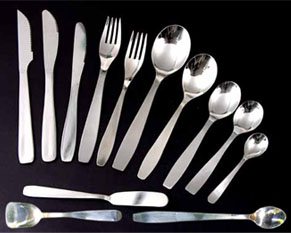
Regardless of its most salient feature, stainless steel is a very versatile material and is used in a large number of products that are used in everyday life, such as in cutlery and kitchen utensils, on posts and sentry boxes on public roads, and in an almost endless series of tools and structures both in the home and in the industrial field.
Although there is no exact data on when iron ore began to be smelted to produce metals, archaeologists have discovered tools of this type of material in Egypt what would they date from the year 3000 BC
Statistics dating from 2005 indicate that world crude steel production has been at 1,129.4 million tons. Asia is the main producing region, thanks to China (which produces 280 million tons per year) and Japan (112 million tons per year).
Leave a Reply