
abbot
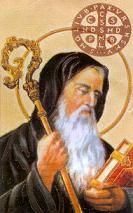
Abbot is a concept that, according to what is detailed by the dictionary of the Royal Spanish Academy (RAE), comes from abbas, a Latin word. The term refers to the religious who occupies the top position in a type of monastery known as abbey.
The abbot, therefore, is the spiritual father, leader and person in charge of a abbey. In its origins, the notion was not linked to a hierarchy or a formal position, but was a honorary title. The honor arose in Syrian monasteries and then began to be implemented in Europe.
With regard to the way in which the abbots lived before the formal organization, it is known that they were hermits, who, through their acts and customs, pursued a state in which their spirit was liberated from the material world. It was precisely thanks to this discipline that they could achieve a degree of knowledge and harmony that attracted other religious to congregate around them.
Far from being a selfish attitude or a symbol of lack of interest in other human beings, the isolation of the first abbots had purposes of spiritual enrichment and reflection that later also benefited those who followed them. For example, when they reached a level of food production sufficient for their own consumption, they did not hesitate to share the surplus with others.
One of the biggest names in this context is Saint Benedict of Nursia, a Christian priest who lived between the late 5th and mid 6th centuries in the Byzantine Empire. It is considered the forerunner of western monastic life. He was the founder of the Benedictine order, which had the objective of making the monasteries self-sufficient, that is, to be based on the autarchy, since until then they used to be organized around a church.
Saint Benedict of Nursia has various symbolic titles, such as being patriarch of the monasticism of the West and patron of Europe. The concept of monasticism, for its part, is defined as the commitment to the lifestyle described above, characterized by asceticism and devotion to a religion, following a certain number of rules. In this regard, San Benito was the author of «The Saint Rule«, Which has inspired various communities; It is a work composed of a prologue and 73 chapters in which he established certain principles that he considered fundamental for life in the monastery, such as "praying and working."
When the title began to become popular, it went on to name the superior of a monastery organized as community, which acquired the name of abbey. At the end of XV century, abbot was already an ecclesiastical institution, like bishop and others.
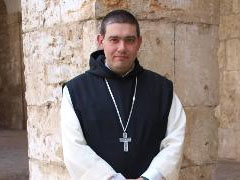
In this way, the abbots became, in addition to religious, authority figures who ruled the abbeys. They had jurisdiction over the monastery and over the subjects, they could consecrate churches and give blessings, among other issues.
In addition to the mentioned San Benito, there were many other abbots of great importance historical in the catholic church. Saint Anthony Abbot (251-356), for example, was the creator of the hermitic movement.
Saint-Denis Suger, Egidio Abad Y San Molaise are other abbots who, for their actions and achievements, achieved relevance throughout the story.
From an iconographic point of view, the representation of the abbot must include the abbatial cross in his hand, the habits corresponding to their order and, in the case of mitred abbots, the headdress known by the name of miter, characterized by being high and ending in a point.
There are some expressions in the Spanish language that include the word abbot, such as the following: abbot's face, red, thick and plump face; give yourself an abbot's life, lead a good life; abbot's table, spare no expense when it comes to eating.
Leave a Reply