
acrophobia

According to experts in Psychology, the acrophobia is the name given to the exaggerated and impossible to control fear of heights. This concept has its origin in the Greek terms akra (translated into Spanish as "height") Y phobia (It's understood as "fear").
The term phobia, meanwhile, comes from the Greek words phobos (fear) attached to the suffix ia (quality), what is understood as the quality of afraid. Acrophobia is a term coined in the late nineteenth century and began to appear in cities where tall skyscrapers existed. It was Andrea Verga, a renowned Italian psychiatrist of that period, who, studying the symptoms that this disease presented, he could describe it.
According to scientific studies, this term is related to a persistent and unjustified fear of heights that can arise in certain situations and be reflected through high levels of anxiety. The stage of life in which it usually presents for the first time is at the end of childhood or early adult life and can be the result of strong pressure or psychological stress. Some specialists also associate it with the fear of not resisting the temptation to jump into the void from a high place.
A acrophobic (person with acrophobia) has a evasive behaviorFaced with the dreaded situation, caused by an abrupt level of anxiety produced by said phobia and which can condition their social and work life.
Those who suffer from acrophobia, therefore, avoid by all means looking out onto a balcony, approaching the edge of a cliff or climbing to a high vantage point, for example. It is not even necessary for the person to be at a high altitude to feel fear: the fact of supposing or imagining that he or someone he knows may be in such a situation causes him a level of anxiety that he cannot repress and that usually result in a panic attack.
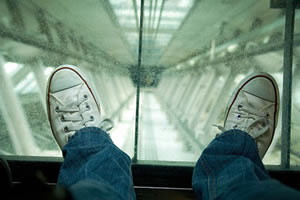
The symptom of these nervous breakdowns are: accelerated heart rate, excessive sweating, labored breathing, chest pain, dizziness, feeling of loss of control, chills and lightheadedness. It is a very strong feeling of fear and insecurity that can even convince the patient that he is losing his balance and that the body does not respond to him.
Acrophobia is related to vertigo from height, which causes in the sufferer a marked feeling of insecurity and fear of the possibility of a fall, which can even be experienced by a third party who could fall. When someone feels vertigo, their balance is altered and is conditioned by a sensation of rotating movement that can be detected both in the body itself and in any object that is around it.
To treat acrophobia, the method from "habituation”Which consists of presenting the patient with different relaxation techniques to help you cope with high stress situations. Gradually the therapist gets the individual to face situations in which this phobia appears, so that the patient works on it and gets the fear progressively decrease.
Leave a Reply