
artery
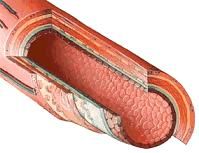
From Latin artery, a artery it's a vessel or duct which is responsible for carry blood from the heart to other parts of the body. In this sense, it fulfills the inverse task of the veins, which move blood from the capillaries to the heart.
The arteries are elastic and membranous ducts, which have divergent branches. These blood vessels are made up of three layers: a external or adventitious (of connective tissue), a half (with muscle fibers) and a internal or intimate (composed of the endothelium and a subendothelial conjunctiva layer).
There are two major systems of arteries: the aorta artery system and the pulmonary artery system.
From the crook of the aorta, various branches are born, such as the carotid artery, the bronchial arteries, the lumbar arteries, the renal arteries, the coronary arteries and the genital arteries.
The pulmonary arteryInstead, it is the only artery that carries blood with carbon dioxide (just as veins do). It originates in the right ventricle of the heart and divides into two terminal branches, the right pulmonary artery and the left pulmonary artery. Of course, these branches target the lungs.
In another sense, it is known as the artery to the Street of a town or city, to which many other streets flow. For example: "9 de Julio Avenue, one of the main arteries of the city of Buenos Aires, is blocked by a protest by state workers", "The city needs new arteries to avoid traffic congestion".
Coronary artery disease
One of the leading causes of death in many countries of the world is coronary artery disease also known as coronary heart disease, both in the male and female population. It is produced by blockage of a coronary artery leading to a heart attack or myocardial infarction due to inefficient blood supply to the heart.
The cause that causes the occlusion of an artery is the buildup of fatty or waxy deposits (cholesterol, calcium and other elements present in the blood) inside it; This accumulation is known as atherosclerotic plaque and causes the arteries to become stiff and the blood fluid cannot pass through it smoothly.
This blockage occurs gradually, slowly reducing the flow of blood and oxygen to the heart. The way it can be detected is by the presence of chest pain, shortness of breath and similar symptoms. At an advanced level it causes heart attacks.
When a patient comes to the doctor's office with these symptoms, he is referred to the cardiologist who has a specific preparation for all diseases related to the functioning of the heart, arteries and veins.
Among the tests that can detect this disease are: electrocardiogram (ECG), stress test, electron beam computed tomography, and blood tests, among others.
In many people the disease takes many years to manifest clearly and the symptoms do not become fully visible until the blockages are very severe and signify a threat to the patient's life. In these cases, the symptoms are present not only when the patient is making effort or physical exercise, but also when he is at rest.
It should be mentioned that, although it is a more common disease among men, many women can suffer from this ailment and, in some of them the symptoms are, in addition to those mentioned, nausea and pain in the back and jaw.
Finally, it should be mentioned that not all heart attacks They are clearly noticeable, so if you suffer from any of these symptoms, it is best to see a doctor to rule out possible conditions of this type.
Leave a Reply