
Customs
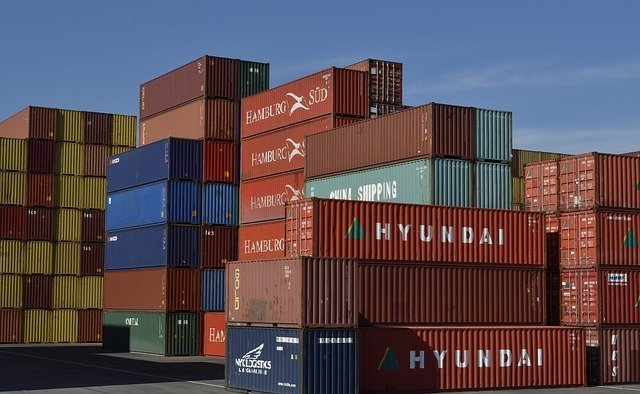
A Customs Office is a physical space generally located in strategic areas such as cross-border spaces, port spaces, airports and railway terminals. In these, all activities related to the trafficking of products, people and capital are regulated and controlled, whether they are imported or exported.
Although it is difficult to place them in time, customs already existed in ancient times (precedents are known in the Phoenician, Hindu, Hellenic civilizations, etc.). These arise with the intention of controlling the merchandise and the people that circulated between the territories and by the desire to collect a tax rate for said circulation. There are a wide variety of trade protection instruments.
Customs today
Currently, customs are a public body in charge of the government of the country where they are located (as a general rule, the physical space where they are located is an office and they depend on the Ministry of the Economy).
They are subject to the current legislation of the country or group of countries where they are established.
Customs agents are in charge of carrying out customs procedures, either on their own behalf or on behalf of the person on whom such procedures are carried out.
Main functions of customs
Customs are essential to apply trade policies, their main functions are:
- Control the international traffic of people, goods and capital.
- Control, register and urge the collection of the required duties and taxes.
- Determine an adequate valuation of the duties and taxes to be paid.
- Tasks of compiling statistics related to international trade.
- Instrument of monetary policy, (since they contribute greatly to the development of the economies of the countries).
Customs types
Depending on the type of jurisdiction that regulates them and the route they control, we can find:
- Maritime customs: They are located in port areas and their main function is to control and regulate the entries and exits that are given by sea.
- Air Customs: These are located at international airports. They are in charge of verifying the documentation and the situation of passengers when entering or leaving a country as well as the control of duly regulated luggage.
- Land Customs: They are located on the physical borders between different countries. In these, the passage of people and vehicles of different kinds is controlled, such as cars, motorcycles, cargo vehicles, etc.
According to the function they fulfill at any given moment in time, we can classify customs as follows:
- Input: They are in charge of receiving merchandise that will be declared as national consumption.
- Of destiny: Its function is to receive goods or products sent by third parties.
- Border crossing customsThese in particular are neither emission nor merchandise reception, but rather those in charge of controlling merchandise that are still in the process of transit to their destination.
Leave a Reply