
Extensive agriculture
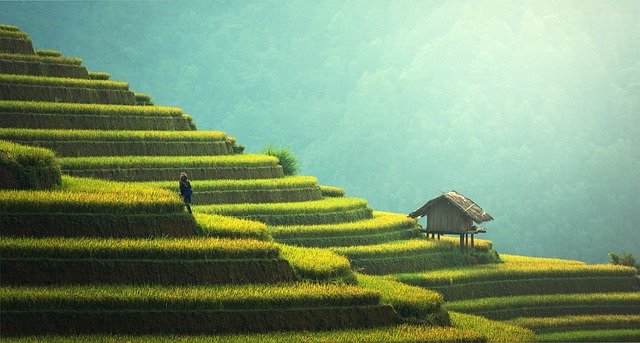
Extensive agriculture is a type of agriculture focused on the use of natural resources, and large fields of cultivation, to maximize production.
Extensive agriculture is an agricultural production system that focuses on the use of natural resources to obtain production. It is a type of agriculture that is used in very large areas, with large fields of cultivation. Its objective is to maximize production, but respect the environment and the ecosystem. To do this, this type of agriculture, unlike intensive agriculture, has less technification, as well as lower energy consumption. Therefore, it is also less harmful to the ecosystem.
This type of agriculture could be included within organic farming.
Along with intensive agriculture, it is one of the best known types of agriculture on the planet.
Characteristics of extensive agriculture
Among the characteristics that define extensive agriculture, the following should be highlighted:
- He is one of the best known types on the planet.
- It is commonly used in developed and undeveloped economies.
- It focuses on large-scale and small-scale production.
- It is usually a very varied production.
- It can be done for commercial purposes, or not.
- It makes use of natural resources to maximize production.
- Requires less capital investment.
- It is less harmful to the ecosystem.
- It adapts to growing cycles.
Advantages and disadvantages of extensive agriculture
Apart from this, this type of agriculture, in the same way that it has advantages, also has disadvantages.
Therefore, the advantages and disadvantages of this type of agriculture are shown below.
Among the advantages we could say:
- Less harmful to the environment
- More inclusive than intensive.
- It presents a lower investment to extract production.
- It does not require as much energy to produce.
- It is a type of agriculture that uses fewer chemicals.
On the other hand, among the disadvantages we could include:
- Production is less.
- The job is of lower quality.
- It depends on the agricultural cycles and the meteorological phenomena.
- It is less productive than other types.
- It is a type of agriculture with less added value.
Products in which extensive agriculture is usually used
Among the products in which this type of agriculture is usually used, it is worth highlighting:
- Cereals.
- Vegetables.
- Fruit.
- Vineyard.
- Some vegetables, such as melon and onions.
Difference between extensive agriculture and intensive agriculture
Among the best known types of agriculture we find intensive agriculture and extensive agriculture.
These types, even presenting common aspects, present clear differences that we will clarify below.
On the one hand, extensive agriculture is a type of agriculture that does not try to modify anything with capital, but adapts to agricultural cycles. It uses less energy and fewer resources. It is not so harmful to the environment. At the same time, the producers are less dimensioned and present other alternative purposes.
While, on the other hand, intensive agriculture focuses on the mass production of products, with the aim of having them for commercial use. It is characterized by the use of machinery, as well as large amounts of energy. It presents a high degree of technification, which is why it is usually used in developed economies.
Example of extensive agriculture
Among the best known examples of extensive agriculture is agriculture that takes place in Africa and Latin America, given the lack of resources.
On the other hand, the agriculture practiced in Asia, on many occasions, is also usually extensive.
At the same time, finally, we have agriculture that develops in the Eastern countries. Also characterized by being extensive.
Leave a Reply