
anode
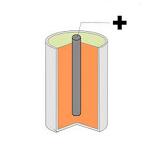
The notion of anode It is used in the field of physical to name a positively charged electrode. An electrode, on the other hand, is the end of a conductive material that, when linked to a medium, transfers or obtains from it an electric current (a flow of charges).
The etymology of anode leads us to a Greek expression that can be translated as "Ascending path". The British scientist Michael Faraday (1791-1867) was the one who used the concept for the first time.
At the anode a reaction of oxidation: increases its oxidation state from the loss of electrons. It should be remembered that, in this type of reaction, the reducing agent gives electrons to the medium and increases its oxidation state (oxidizes), while the oxidizing agent receives these electrons and minimizes their oxidation state (is reduced).
The anode, when oxidizing, allows the passage of electric current towards the negative pole, called cathode. In the batteries (also called batteries), the electrical sources and the electronic valves, the anode is characterized by being the electrode with the highest potential.
Take the case of a voltaic cell. This element generates electric power through the oxidation-reduction reactions that take place inside, where two metals are connected by a salt bridge or there are related semi-cells through a membrane with pores. The anode in these cells can be the zinc or other material.
Is named galvanic anode or sacrificial, finally, to the piece that is used to provide protection against corrosion in a metal structure that is submerged or buried. In the field of nautical, for example, it is very important to ensure that electrolytic corrosion does not damage any of the parts that are inevitably submerged in a ship, such as the rudder blade, the propeller, the shaft, the drift. or keel.
It is called electrolytic corrosion or electrolysis to a deterioration that the emergence of an electric current causes in the submerged metals, which are grouped according to their potential: the cathodes have the highest potential, while on the other side are the anodes, which decompose instead of the first.
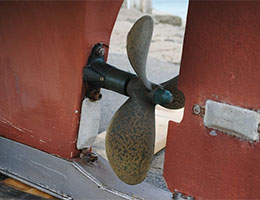
It is important to note that the action of the anode is subject to the nature of the water. Based on this factor, there are different types of anodes, such as the following:
* zinc sacrificial anode: it is used in salt water, as well as aluminum, since in this medium the resistivity is usually lower. The most common applications for this type of anode are production platforms, small boat rudders and propellers, the inner surface of storage tanks, ship hulls, and marine engines that are cooled with water. Water salty;
* magnesium sacrificial anode: Magnesium is a metal with a particularly low, negative electrical potential, which is why it is ideal for areas where the resistivity of the electrolyte is higher. This type of anode is used in fresh water, both in boats and in water heaters. Despite being a common choice, magnesium can cause problems if the protected metal has a potential too negative, since the mobilization of hydrogen ions on the cathode can lead to the coating being detached;
* aluminum sacrificial anode: the aluminum, which is used in brackish water, offers a number of advantages over the aforementioned metals, such as lower weight and higher capacity. On the other hand, since its electrochemical behavior is not as stable as that of zinc, for example, it should not be used without taking certain precautions.
Leave a Reply