
anaerobe
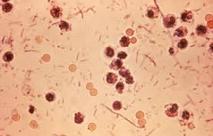
We have to establish, first of all, that anaerobic is a neologism that was shaped in the second half of the 19th century within the world of microbiology and biochemistry. It is the result of the sum of three clearly differentiated components:
-The prefix “an-”, which is used to indicate negation.
-The term “aero”, which can be translated as “air”.
-The noun “bios”, which is synonymous with “life”.
Specifically, we can determine that it was a term coined by the famous French microbiologist Louis Pasteur. Exactly the first time he used it as such was in a weekly publication called "Comptes Rendus hebdomadaires de l´Academia des Sciences".
Anaerobic is called organism that can survive despite the lack of oxygen. The beings that, on the other hand, do require oxygen to live, are called aerobic.
Anaerobes, therefore, do not use oxygen in their metabolic processes. According to which substance is the terminal electron acceptor (the element that receives an electron in the framework of photosynthesis or cellular respiration), it can be organisms that develop a anaerobic respiration or that have a fermentative metabolism.
In the case of anaerobic organisms that perform anaerobic respiration, they have a molecule inorganic other than oxygen as a terminal acceptor. Anaerobic organisms with fermentative metabolism, meanwhile, have an organic molecule as an acceptor.
Anaerobic respiration works similarly to that of aerobic respiration, although with a non-oxygen molecule as the final acceptor of electrons. These beings use sulfur, nitrate, arsenate, sulfate or another substance to achieve the oxidoreduction of monosaccharides and other elements.
Fermentation of anaerobes, on the other hand, is a process of the catabolism that allows to develop the oxidation without oxygen. You can distinguish between the alcoholic fermentation, the acetic fermentation and others.
It is also possible to find facultative anaerobes (aerobic beings that, in the absence of oxygen, develop the fermentation). When the organism is not in a position to subsist on oxygen, on the other hand, it receives the name of strict anaerobic.
Two types of anaerobes to which an equally significant third should be added. We are referring to those that are called aerolelentes. As their own name already indicates, they are those that have the peculiarity that they cannot use oxygen to undertake their growth, but that they can tolerate its presence.
It should be noted that in the group of anaerobic beings we can find bacteria, mushrooms and other microorganisms.
It is important to establish that there are anaerobic bacteria that are responsible for different diseases and infections. Thus, among them, we can highlight both what are postoperative or gynecological infections, which are generated by anaerobic bacteria of the vaginal flora, for example, and those that affect soft tissues and even the skin. Of course, without ignoring that they can also cause serious pathologies that have the bones as affected parts.
Leave a Reply